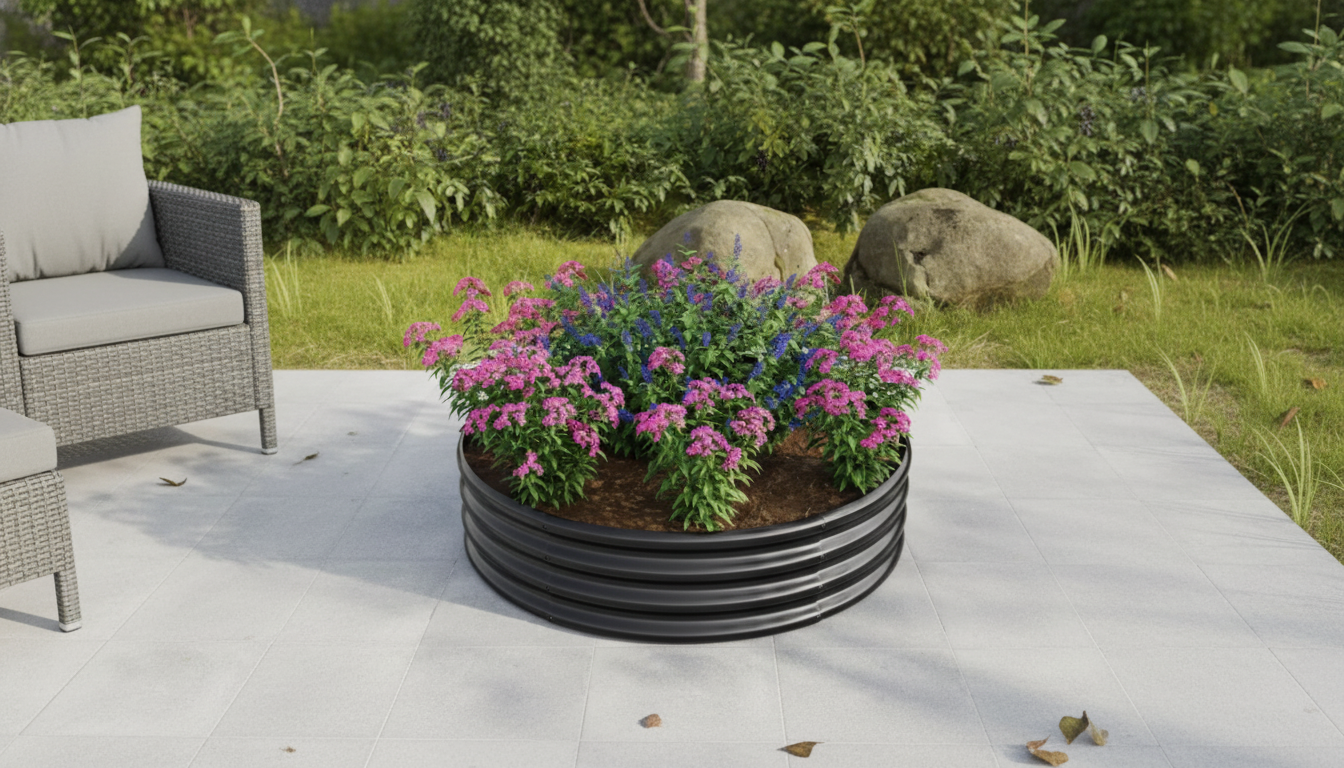
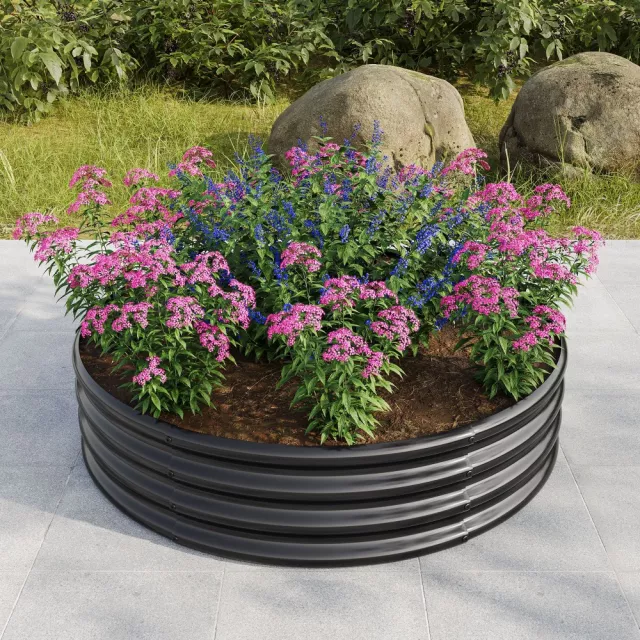
A tall, round, metal planter can turn a small patio or balcony into a productive growing space while keeping plants elevated for easier care. With 11.4 inches of soil depth, this raised bed style supports a wide range of flowers, herbs, and compact vegetables, helps improve drainage, and reduces the need to bend while planting, watering, and harvesting.
If you’re setting up a clean, defined planting area outdoors, the Tall Round Metal Raised Garden Bed – 11.4” Deep Outdoor Patio Planter Box is a simple way to add structure and height without committing to an in-ground garden.
Round planters are especially handy on tight footprints because there are no sharp corners to “waste” space, and the shape naturally encourages an even watering pattern (less dry soil hiding in corners). For container fundamentals and practical design tips, the Royal Horticultural Society’s container gardening guidance is a helpful reference point.
| Checkpoint | Why it matters | Simple guideline |
|---|---|---|
| Sun exposure | Determines what can be grown successfully | Aim for 6+ hours for most vegetables; 3–6 hours for many herbs and flowers |
| Surface type | Affects drainage and staining | Use a tray/mat if needed on finished decking; avoid trapping water underneath |
| Water access | Reduces missed watering in hot weather | Place within hose or watering-can reach |
| Wind exposure | Can dry soil and stress plants | Add a windbreak or place near a wall/railing in breezy areas |
| Clearance | Improves comfort and maintenance | Leave at least 18–24 inches for access around the bed where possible |
For region-specific timing (what to plant and when), it helps to know your zone—use the USDA Plant Hardiness Zone Map to align crop choices with your local climate.
| Goal | Suggested mix | Best for |
|---|---|---|
| All-purpose | 40% potting mix + 40% compost + 20% perlite/pumice | Herbs, flowers, leafy greens |
| Moisture-holding | 40% potting mix + 40% compost + 20% coco coir | Hot patios, frequent sun exposure |
| Fast-draining | 50% potting mix + 30% compost + 20% perlite/pumice | Mediterranean herbs, plants prone to root rot |
After planting, water slowly the first time until you see steady runoff. That initial soak helps eliminate dry pockets in the mix and settles the soil around roots—important in a raised container where drying can happen faster than expected.
Patio containers often dry from the sides first, especially in sun and wind, so it helps to water in a slow circle around the planter rather than pouring in one spot. For a research-based breakdown of container watering and fertilizing schedules, see the University of Minnesota Extension guidance.
For cooler mornings and shoulder-season gardening, a sturdy layer can make quick watering and pruning more comfortable. If you want a premium outer layer for outdoor wear, consider the Balenciaga Cotton Denim Jacket with Button Closure and Front Pockets.
Yes for many: herbs, leafy greens, radishes, beets, and several compact pepper or patio tomato varieties do well with consistent watering and feeding. Deeper-rooted crops (large carrots, big indeterminate tomatoes, potatoes) typically perform better with more depth or very careful variety selection and maintenance.
Usually no. A gravel layer can create a saturated zone above it (“perched water”), so a well-aerated container mix plus clear drainage openings is a more reliable way to prevent soggy roots.
It depends on sun, wind, plant size, and soil mix, but warm, bright patios often need daily checks in summer. Mulching the surface and watering early in the morning helps reduce heat stress and slows evaporation.









Leave a comment