
A budget works best when it matches real life: variable bills, irregular income, impulse spending, and goals that compete with each other. The most sustainable approach is a clean, repeatable system you can run every month without starting over—using proven budgeting frameworks, a simple planner workflow, and clear steps for saving, paying down debt, and staying consistent.
Before picking a framework, get a clear picture of how money actually moves in and out. This snapshot prevents “perfect” budgets that don’t survive the first unexpected expense.
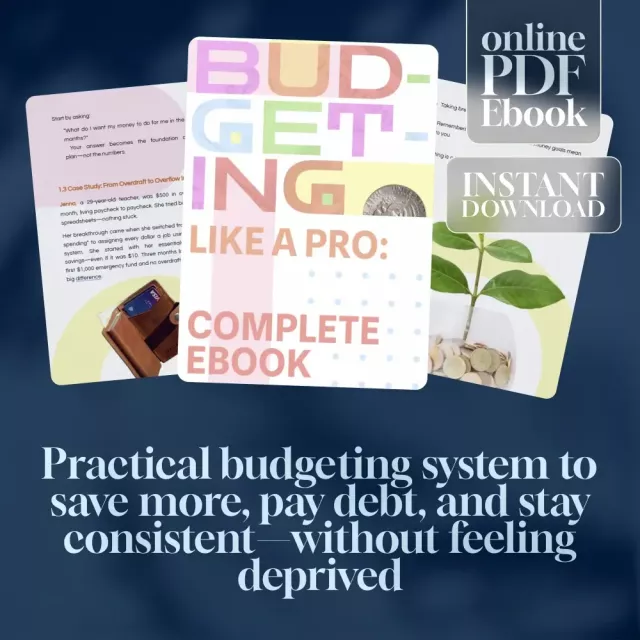
For extra structure and budgeting worksheets, keep everything in one place with Budgeting Like a Pro: Complete eBook – Personal Finance Planner, Zero-Based Budgeting, 50/30/20, Pay-Yourself-First, Debt Payoff & Savings Plan.
| Method | How it works | Best for | Watch-outs |
|---|---|---|---|
| 50/30/20 | Allocate income into Needs, Wants, and Savings/Debt buckets | Stable income; fast setup | Buckets can be too broad; requires honest category definitions |
| Zero-based budgeting | Assign every dollar a job until income minus allocations equals zero | Tight margins; goal-driven months; detail-oriented planners | Needs frequent check-ins; can feel restrictive without flexibility categories |
| Pay-yourself-first | Automate savings/investing/debt extra payments first, then spend the remainder | Building consistency; people who forget to save | If automated amounts are too high, cash flow stress and overdrafts can happen |
If you want reputable consumer-facing budgeting references, the Consumer Financial Protection Bureau (CFPB) and the FDIC Money Smart resources are solid starting points.
Zero-based budgeting is less about being strict and more about being intentional. A fast workflow keeps it practical.
One practical way to curb impulse spending is to schedule “wants” instead of banning them. For example, planning a future splurge and saving toward it can reduce guilt spending now—whether it’s something small or a bigger purchase like Balenciaga Cotton Denim Jacket with Button Closure and Front Pockets or Balenciaga Knife Logo Allover Sock-Style Ankle Boots.
| Debt | Balance | APR | Minimum | Target extra payment |
|---|---|---|---|---|
| Credit Card A | $____ | ____% | $____ | $____ |
| Credit Card B | $____ | ____% | $____ | $____ |
| Auto Loan | $____ | ____% | $____ | $____ |
| Student Loan | $____ | ____% | $____ | $____ |
For plain-language guidance on credit, repayments, and avoiding costly traps, review the Federal Trade Commission (FTC) credit and debt resources.
If you want a structured system with worksheets and prompts, use Budgeting Like a Pro: Complete eBook – Personal Finance Planner, Zero-Based Budgeting, 50/30/20, Pay-Yourself-First, Debt Payoff & Savings Plan to map income, assign categories, track progress weekly, and keep debt and savings goals in one place.
If a planned “reward” helps you stay motivated, you can also create a dedicated sinking fund for a future purchase and track it alongside your goals—such as Brunello Cucinelli Alpaca Oversized Sweater with Crochet Weave.
50/30/20 is a high-level guideline that splits income into broad buckets, while zero-based budgeting assigns every dollar to a specific job until there’s nothing unassigned. 50/30/20 is often easier to start with; zero-based is usually easier to control when money is tight or goals are aggressive.
Pay-yourself-first can automate a baseline savings amount (like a starter emergency fund) to stabilize cash flow, then you direct remaining extra money to a debt strategy like avalanche or snowball. This keeps progress steady without relying on willpower each month.
Budget per paycheck using a conservative income estimate, cover essentials first, and lean on sinking funds plus a larger buffer category. In higher-income months, top up the buffer and goal categories before expanding discretionary spending.











Leave a comment