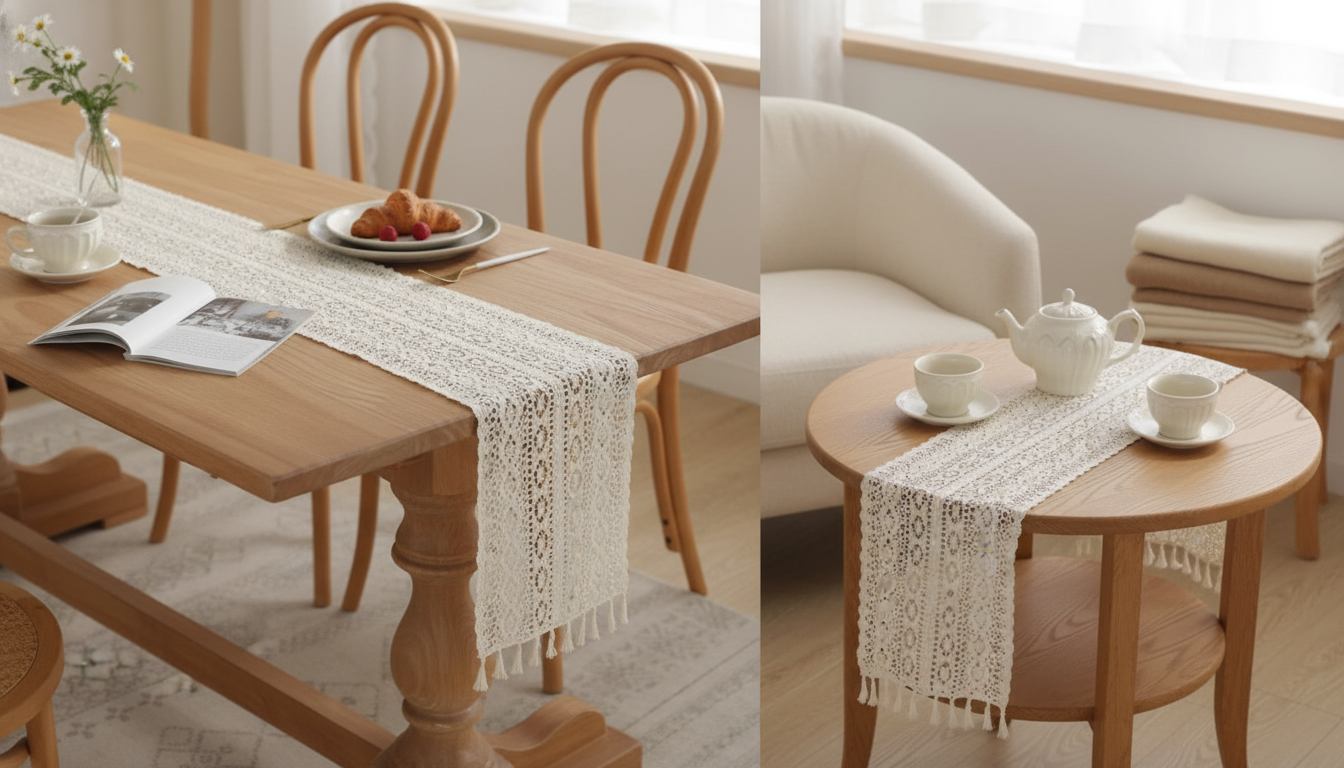
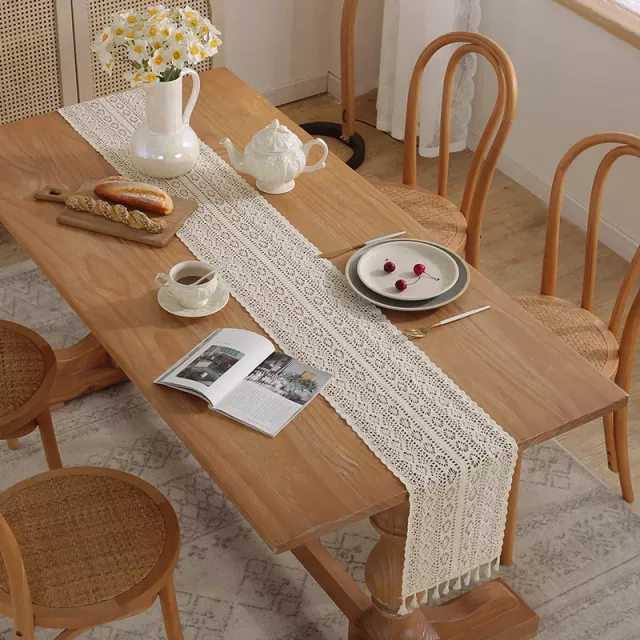
A crochet lace table runner adds texture, softness, and a vintage touch without overwhelming the rest of the décor. This 2-piece set with fringe is easy to layer for everyday meals, coffee-table styling, or seasonal gatherings, while helping define the centerline of a table. If you like a room to feel finished—but still light and livable—openwork lace is an easy upgrade that lets the tabletop show through.
Crochet lace has a distinctive “handcrafted” character that works across many interiors, from relaxed farmhouse to clean modern spaces that need a little warmth.
For a cohesive look with minimal effort, start with a neutral lace runner and build your décor around simple shapes—cylindrical candles, a low vase, or a single tray—so the lace pattern stays the star.
Because crochet lace is visually light, it can add detail without making surfaces feel cluttered. That makes it especially useful on frequently used furniture.
For formal table-setting fundamentals and spacing, a quick refresher from the Emily Post Institute’s table setting guides can help you decide where the runner fits alongside plates, glassware, and serving pieces.
A runner should look intentional, not accidental. The easiest approach is to measure the table length, then decide how much drop looks balanced with your chairs, walkways, and centerpiece height.
| Use case | Recommended look | Tip |
|---|---|---|
| Everyday dining | Minimal overhang or none | Keep fringe clear of plates and serving paths |
| Dinner party centerpiece | Noticeable overhang on both ends | Match runner length to centerpiece scale for a balanced focal point |
| Coffee table styling | Shorter span with centered décor | Use a tray on top to stabilize candles or vases |
| Console/entry table | Medium span with décor clusters | Leave clear space for keys/mail so the surface stays functional |
For more sizing and placement ideas across different table shapes, The Spruce’s guide to table runners is a helpful reference when you’re deciding between a tailored look and a more draped, decorative finish.
Crochet lace reads “soft” by nature, so the most effective styling pairs it with materials that add structure—wood grain, stone, metal, and glass—without competing patterns.
A reliable formula for coffee tables is “low + layered”: place the runner first, then set a tray or a small stack of books on top, and finish with one taller element (a bud vase or a candle) to create height without blocking sightlines.
Lace looks delicate, but it holds up well when treated gently and stored in a way that protects the openwork pattern and fringe.
Yes. Crochet lace can add a bit of grip and reduce the “all-shine” look on glass or high-gloss surfaces; just keep the surface clean and dry to minimize sliding and prevent moisture marks.
It depends on the look: minimal or no overhang feels tidy for everyday use, while longer overhang creates a more decorative centerpiece effect. Measure your table and choose a drop that won’t interfere with chairs, knees, or walkways.
Store the runner flat or loosely rolled, and gently separate the fringe with your fingers after use. Avoid high heat, which can distort fibers and make fringe curl or kink.









Leave a comment