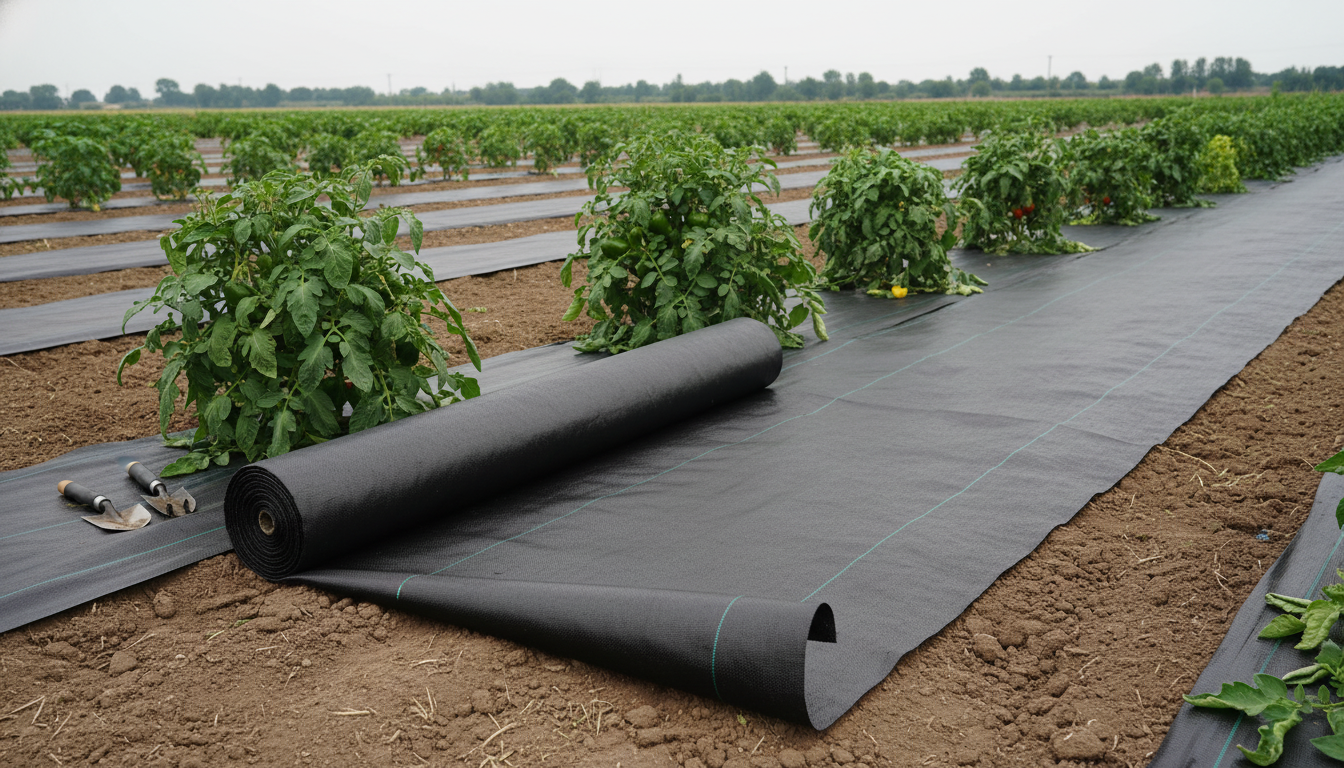
A heavy-duty roll sized for long garden rows, pathways, and commercial-scale planting areas can simplify weed control while still allowing water to reach the soil. A 6×300 ft format is built for coverage first: fewer seams to manage, fewer edges to lift, and less stop-and-start measuring. When installed on a well-prepped surface and protected with mulch or stone, it can reduce weeding time and help keep large planting zones looking consistent season after season. For more guidance, see Using heavy duty landscape fabric in the garden? Or other options ….
Where a 6×300 ft roll works best
- Long, continuous runs: fence-line borders, hedgerows, windbreak plantings, and farm-gate approaches where a single roll can span the length with minimal joints.
- Under gravel or stone paths: helps reduce weed breakthrough and slows the mixing of aggregate into soil—especially useful on frequently used walkways.
- Around shrubs and perennial beds: paired with a top layer of mulch to block light at pinholes and improve appearance.
- Slopes and drainage swales: helps minimize soil splash and surface disturbance, which can keep nearby hardscapes cleaner.
- Large installations: fewer seams means fewer weak points where weeds can exploit gaps or where wind can start lifting corners.
What “heavy duty” should deliver in everyday use
- Tear resistance: stands up to pulling, staking, and occasional foot traffic, with extra attention to durability at edges and plant cutouts.
- Permeability: allows water and air exchange so soil can still breathe and drain rather than turning into a sealed-off layer.
- UV tolerance: helps during the realistic lag time between laying fabric and fully covering it with mulch, gravel, or plantings.
- Stable weave: resists fraying when cut and holds staples/pins without holes enlarging quickly.
- Consistent width: reduces surprises over long runs so coverage stays predictable from start to finish.
For background on how mulches work alongside weed barriers, see the University of Minnesota Extension’s guidance on mulches for the landscape.
Coverage planning and estimating fasteners
A 6×300 ft roll covers 1,800 sq ft before overlaps, trimming, and end anchoring. Real-world coverage is usually lower because seams need overlap (commonly 4–8 inches), and edges often need extra material to tuck or trench in for stability.
- Plan overlaps at seams: typically 4–8 inches, plus extra length at ends for anchoring.
- Staple more in demanding areas: wind-prone sites, slopes, pet routes, or high foot traffic need tighter staple spacing.
- Don’t forget curves and plant openings: extra pins around cutouts and bends prevent edge lift and light leaks.
Quick planning guide for a 6×300 ft roll
| Project type |
Typical overlap |
Staple spacing (edges/seams) |
Notes |
| Straight garden rows |
4–6 in |
Every 3–5 ft |
Fewer seams if rows are longer than 50–100 ft |
| Gravel path or patio base |
6–8 in |
Every 2–3 ft |
Add extra staples at turns and transitions |
| Slopes and berms |
6–8 in |
Every 1–2 ft |
Consider trenching top edge to prevent sliding |
| Shrub/perennial beds |
4–6 in |
Every 2–4 ft |
Top with 2–4 in mulch to protect fabric and improve appearance |
Installation steps that keep weeds from finding gaps
- Prep the surface: remove existing weeds, rake smooth, and clear sharp stones or sticks that can puncture fabric.
- Align the roll to the longest run: laying lengthwise reduces seam count and speeds up fastening.
- Overlap with water flow in mind: place the upper sheet over the lower sheet (like shingles) so runoff and sediment are less likely to push into the seam.
- Anchor early and often: staple the first 3–6 feet, then unroll and staple in sections so the fabric stays tight and doesn’t creep.
- Make clean plant openings: cut an X, fold flaps under, and pin around the opening to reduce exposed soil and light entry.
- Finish edges: bury 1–2 inches where possible, or secure with edging, stone, or heavy mulch to prevent lifting and UV exposure.
For a broader look at landscape weed control tactics (including how barriers fit into an overall plan), NC State Extension provides a helpful overview of weed management in landscapes.
Best pairings: mulch, gravel, and ground cover
Oregon State University Extension also explains how mulch contributes to suppression in mulch and weed control in landscapes.
Common problems and simple fixes
When to replace or refresh
Shop options for big coverage projects
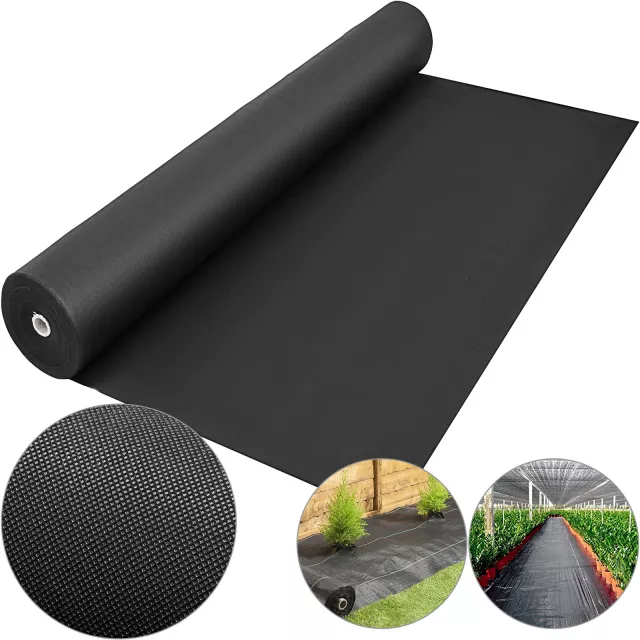
For large beds, long rows, and extended pathways, start with a roll sized to minimize seams. The Heavy Duty 6×300 ft Landscape Fabric Weed Barrier is designed for wide-area coverage and efficient installation.
If you’re also picking up essentials for outdoor workdays or jobsite errands, you can browse other in-stock items like the Balenciaga Cotton Denim Jacket with Button Closure and Front Pockets.
FAQ
How long does heavy-duty landscape fabric last?
In most landscapes, heavy-duty fabric can last several years when covered with mulch or gravel, but exposed fabric breaks down faster from UV and surface abrasion. Keeping it top-dressed and securing edges well typically extends its useful life.
Should landscape fabric go under mulch or under soil?
Place landscape fabric on prepared soil and cover it with mulch or gravel. Burying it under soil often creates a new weed-growing layer above the fabric and can reduce the barrier’s effectiveness.
Does landscape fabric stop all weeds?
No—it blocks many weeds coming from below, but seeds can still germinate in mulch or soil that accumulates on top. Light maintenance like raking debris, topping up mulch, and pulling small sprouts early helps prevent buildup.
Recommended for you









Leave a comment