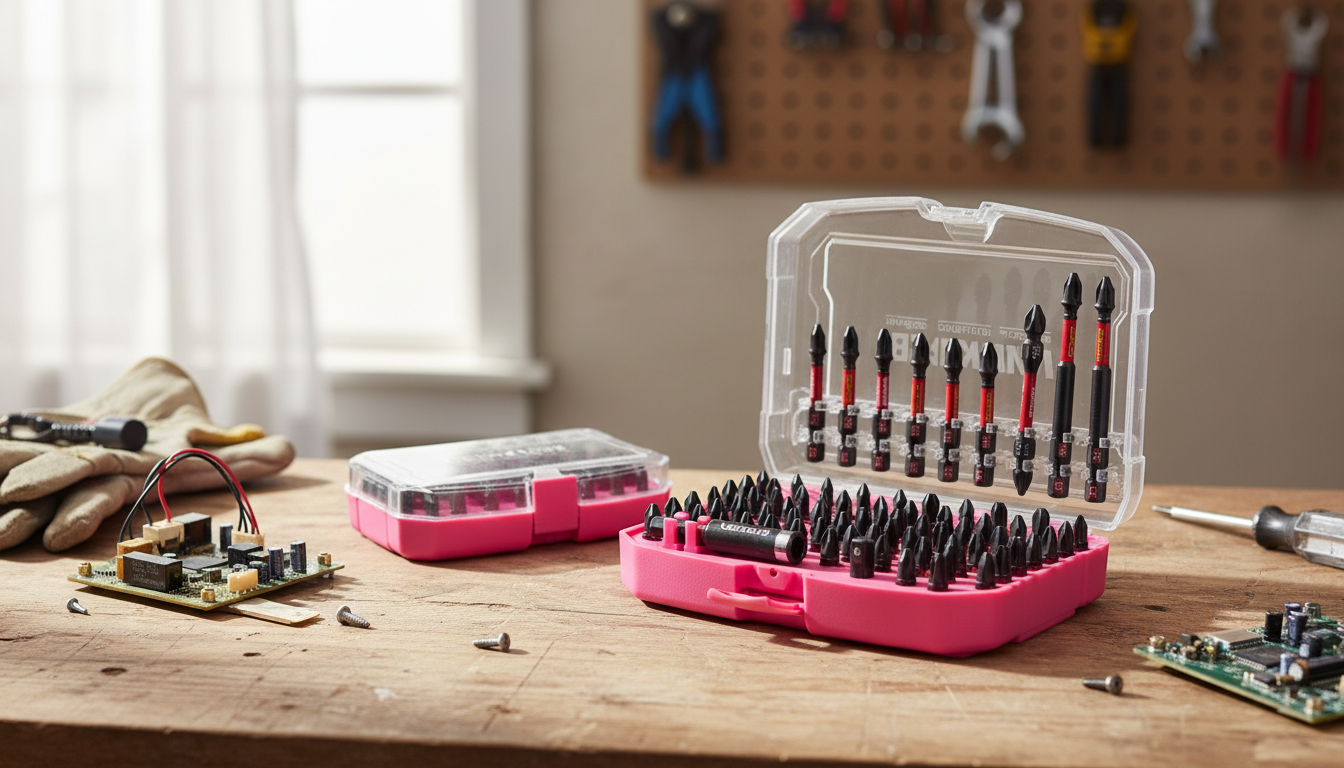
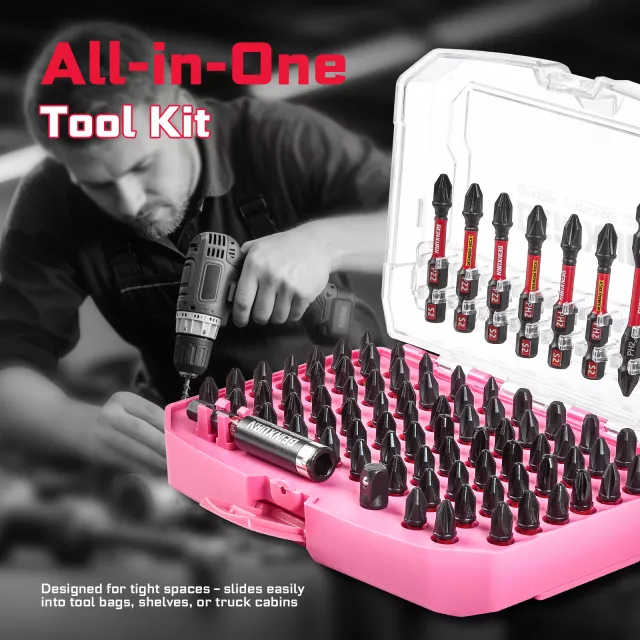
A magnetic driver bit set is a practical way to handle common fastening jobs with fewer stripped screws and less fumbling—especially in tight spaces or overhead work. This 83-piece set is designed to cover frequent screw types and sizes for household fixes, furniture assembly, and light workshop tasks while keeping everything organized in one compact kit.
Whether the job is quick maintenance or a weekend DIY project, magnetic bits add a little extra control right where it counts: at the moment the screw starts. That small advantage can mean fewer drops, cleaner screw heads, and faster progress when you’re moving through a list of fixes.
Most everyday drivers and bit holders use a common hex interface (often referenced by the ISO 1173 bit/holder standard), which is why a general-purpose set like this can slot into many existing tool setups. For background on the standardized hex drive interface, see ISO 1173.
This kit is built around convenience: multiple bit options in one place, magnetic holding to steady screws during placement, and a case that keeps pieces sorted so the right size is easier to grab mid-task.
| Item | What it’s for | Why it matters |
|---|---|---|
| 83-piece assortment | Covers multiple fastening needs | Reduces trips to find the right bit |
| Magnetic holding feature | Keeps screws steadier on the bit | Less dropping and better starts |
| Organized storage case | Stores and transports the set | Faster selection and fewer lost bits |
A general magnetic driver set shines in the “frequently used” category: the screws and fasteners found around the home, in apartment maintenance, and in light DIY builds. It’s a smart grab when the goal is to be ready for common tasks without hauling a full tool chest.
If you regularly work with delicate devices (very small screws) or high-torque applications (impact driver use all day), pairing this type of kit with dedicated micro-bits or impact-rated accessories can help cover those extremes without over-stressing standard bits.
The biggest improvements come from fit and technique. Even strong magnetic hold can’t compensate for a bit that’s slightly too small or not fully seated—two common causes of cam-out (when the bit slips out of the screw head).
For overhead installs (like curtain brackets or small fixtures), consider pre-positioning the screw on the magnetic bit, aligning the bracket hole, and driving slowly until the threads bite. That controlled start is where magnetic holding typically saves the most time.
Bits are consumable tool accessories, but a few habits can keep them performing well longer—especially the most-used sizes.
For general safety guidance around hand and power tools (including PPE), refer to OSHA’s hand and power tools resource. A few basic precautions—stable footing, eye protection, and controlled speed—go a long way toward safer, cleaner fastening.
They typically work with most drill/drivers and bit holders that accept standard hex-style bits. Exceptions can include proprietary quick-change systems and very small precision screwdrivers designed for micro-bits.
Screws can pick up slight temporary magnetism from contact, but it’s usually minimal and not a problem for everyday household hardware. If you’re working near sensitive electronics or magnetic media, it’s reasonable to keep magnetized tools and parts a bit farther away.
Use impact-rated bits when driving fasteners with an impact driver or in high-torque situations where standard bits may chip, twist, or wear quickly. If you notice frequent bit breakage, cam-out under load, or visible deformation, it’s a good sign to switch to impact-rated accessories.









Leave a comment