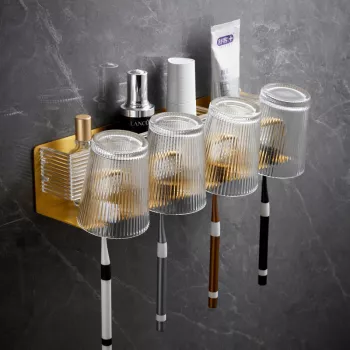
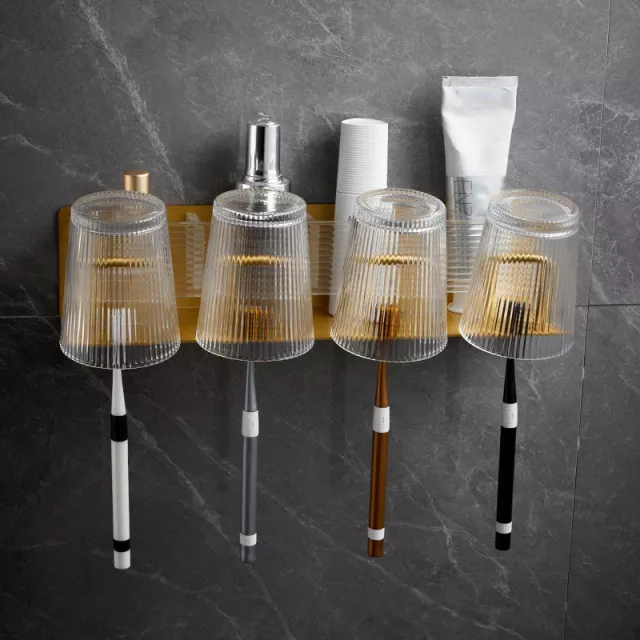
A clutter-free sink area is easier to clean and easier to share. A wall-mounted toothbrush and cup holder keeps daily essentials off the counter while adding dedicated spots for brushes and rinsing cups—without the mess of drilling or permanent hardware. This acrylic option is designed for a clean, modern look and quick installation on smooth bathroom surfaces.
Most bathroom counters get crowded fast—soap dispensers, skincare, razors, and hair tools all compete for the same few inches of space. A wall-mounted holder creates a predictable place for toothbrushes and cups so the area around the faucet stays clearer and easier to wipe down.
Clear acrylic blends into many bathroom styles—bright white tile, darker vanities, and chrome fixtures—without visually “crowding” a small wall. Because it’s transparent, it tends to feel lighter than bulkier racks, which can be helpful in tight powder rooms or apartments.
For day-to-day hygiene, the key advantage is separation and airflow. When brush heads are not pressed together on the counter, they can dry more evenly. For toothbrush care guidance (including when to replace a brush), the American Dental Association is a reliable reference: ADA — Toothbrush Care: Cleaning, Storage, and Replacement.
Adhesive mounting is all about surface contact. The smoother and less porous the wall, the stronger and more consistent the bond tends to be. Before choosing a spot, stand at the sink and simulate your routine—reaching for a brush with wet hands, lifting a cup straight up, and placing items back without bumping a mirror or medicine cabinet.
| Surface type | Recommended | Notes |
|---|---|---|
| Glossy ceramic tile | Yes | Clean thoroughly; avoid mounting across grout lines when possible |
| Glass/mirror edge area | Yes | Allow full adhesive contact; keep away from constant splash zone |
| Stainless steel | Yes | Degrease first; press firmly for full bond |
| Painted drywall | Sometimes | Only if paint is well-cured, clean, and not peeling; test adhesion first |
| Textured tile/stone | No | Reduced contact area can cause early failure |
| Grout line | No | Uneven surface compromises seal and strength |
A clean install is usually what separates a holder that stays put from one that loosens over time. Soap film, lotion residue, and even invisible humidity can prevent full adhesive contact. Take a few minutes to prep the wall and align placement—especially in shared bathrooms where multiple people use it daily.
If your bathroom stays humid, consider running the exhaust fan during and after showers to reduce condensation near adhesive-mounted accessories. General home hygiene habits and moisture control guidance can be found via the CDC: CDC — Hygiene in the Home and Everyday Life.
A wall-mounted holder helps organization, but it still benefits from a quick routine. The goal is to keep water from lingering in cups and reduce residue where the holder meets the wall—both help the bathroom look cleaner and can support longer-lasting adhesion.
If you want a simple, modern way to get toothbrushes and cups off the counter, the No-Drill Wall Mounted Acrylic Toothbrush and Cup Holder is in stock and priced at $43.51. It’s best placed on a smooth, clean, dry surface near the sink—ideally outside constant shower spray—so the adhesive can maintain a strong bond.
Adhesives usually hold best on smooth, non-porous surfaces. Textured tile and grout reduce contact area, which can weaken the bond over time, so it’s better to mount on a flat tile face or another smooth spot.
Follow the included adhesive instructions for the recommended cure time before loading. In humid bathrooms, waiting the full suggested period helps the adhesive reach maximum strength.
Use a soft microfiber cloth with mild soap and water, then rinse and dry. Avoid abrasive pads and harsh solvents to reduce haze and micro-scratches.








Leave a comment