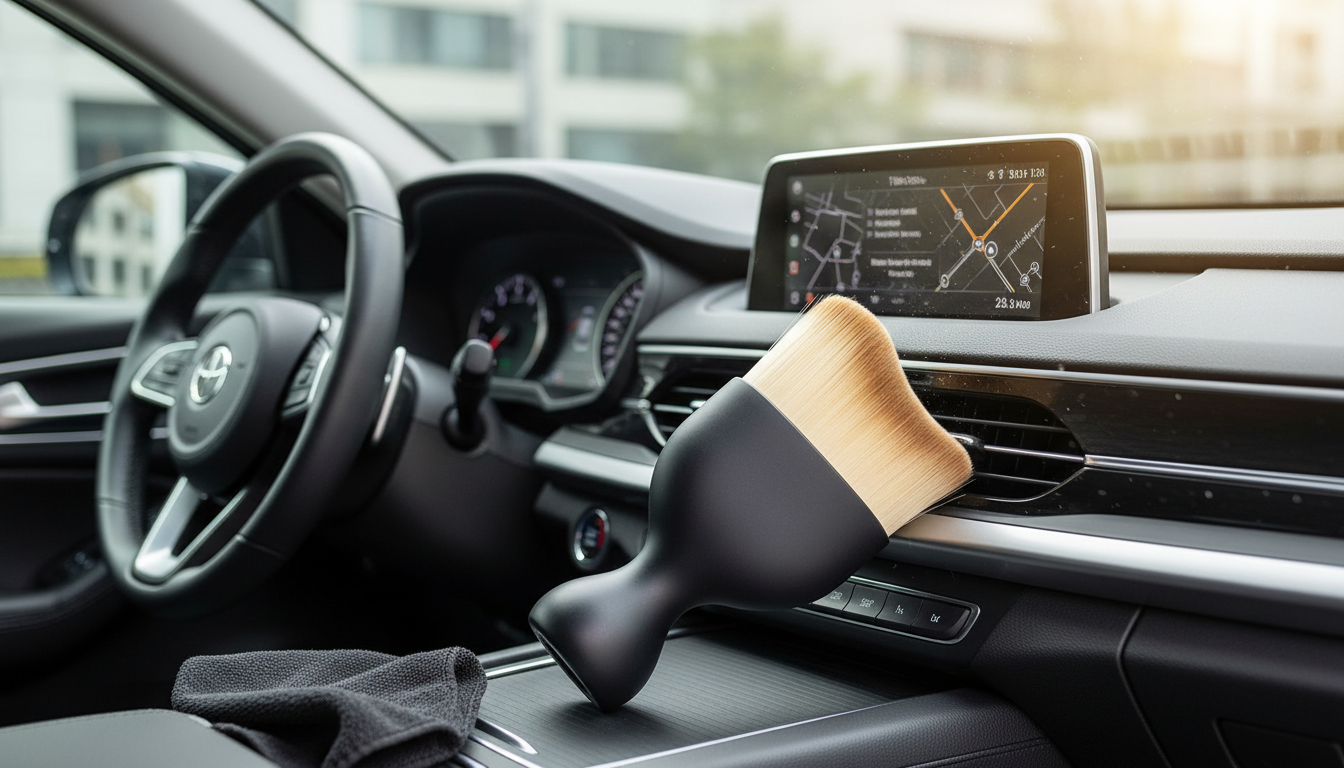
Dust collects fastest on dashboards and inside air vents, where tight slats and textured trim make wiping frustrating and often ineffective. A soft detailing brush is designed to reach those narrow gaps, lift fine debris, and reduce the chance of scratching delicate interior surfaces. Used with the right technique, it helps keep the cabin looking clean without leaving lint, swirl marks, or residue behind.
Why a soft interior brush beats a rag for vents and trim
- Reaches tight spaces: Bristles slip between vent fins, around buttons, and along seams where microfiber can’t fit.
- Lifts dust instead of pushing it around: Gentle agitation dislodges particles stuck to textured plastics and rubberized coatings.
- Reduces scratch risk on glossy trim: A soft brush can be safer than dragging a dusty towel across piano black surfaces.
- Improves results before protectants: Brushing first helps interior cleaners and UV protectants spread more evenly and look less streaky.
- Helps maintain cabin comfort: Removing dust from vents can reduce the amount of debris blown back into the cabin during driving.
Where it works best inside the car
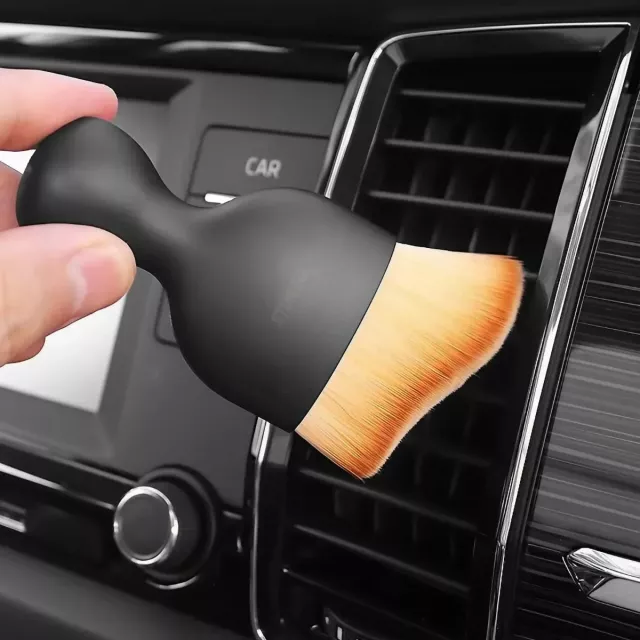
- Air vents: Cleans between fins and inside the vent frame without snagging.
- Dashboard and instrument hood: Clears dust from texture valleys and around gauge bezels.
- Center console and shifter area: Reaches around trim edges, cupholder lips, and seams.
- Door panels: Cleans around window switches, speaker grilles, and handle recesses.
- Seat rails and crevices: Loosens debris along tracks and in tight corners before vacuuming.
- Emblems, buttons, and stitching lines: Helps lift dust that gathers at raised edges and in stitching channels.
How to use a soft detailing brush without making a mess
- Start dry for loose dust: Use light strokes and work top-to-bottom so debris falls to areas that will be vacuumed later.
- Pair with a vacuum: Hold a vacuum nozzle nearby while brushing vents and seams to capture dust as it’s lifted.
- Use minimal product: For sticky grime, mist cleaner onto a microfiber towel or onto the brush (lightly) rather than spraying the dashboard directly.
- Mind electronics: Keep moisture away from screens, infotainment buttons, and charging ports; use a barely damp approach when needed.
- Finish with a wipe: After brushing, wipe surfaces with a clean microfiber to remove any remaining haze or lifted debris.
- Clean the brush after each session: Rinse bristles with mild soap and water, shake out, and air dry fully to prevent residue transfer.
Quick guide: interior areas and best brushing approach
| Interior area |
Best approach |
Tips to avoid damage |
| Air vents |
Brush between fins while holding a vacuum nearby |
Use light pressure; avoid soaking the brush |
| Dashboard texture |
Long, gentle strokes across textured plastic |
Wipe after brushing to prevent dust redepositing |
| Piano black / glossy trim |
Very soft strokes, then microfiber wipe |
Do not drag dry dust across the surface; wipe frequently |
| Buttons and seams |
Short, controlled strokes along edges |
Keep liquids away from switches; use a lightly damp towel instead of spraying |
| Door handles and pockets |
Brush corners first, then vacuum and wipe |
Check for grit before wiping to reduce scratching |
What to look for in a dashboard and vent detailing brush
- Soft, dense bristles: Improves dust pickup while staying gentle on plastics and trim.
- Comfortable handle and control: Better grip helps avoid bumping screens or pushing debris deeper into vents.
- Size suited for vents: A compact head can fit tighter slats and corners.
- Easy cleaning: A brush that rinses clean helps prevent transferring oily residue to the next surface.
- Multi-surface friendliness: Suitable for plastics, vinyl, and rubberized finishes commonly found in interiors.
Common mistakes that cause streaks, scratches, or re-dusting
For routine interior maintenance, a dedicated brush keeps the process quick and controlled—especially on vent fins, textured dashboards, and trim gaps that towels tend to skip. The Car Detailing Soft Brush for Dashboard, Air Vent & Interior Dust Cleaning is built for light interior dusting where precision matters more than heavy scrubbing.
Detail-day add-on (optional)
If detailing happens outside or in a breezy garage, a durable outer layer can make quick cleanups more comfortable. The Balenciaga Cotton Denim Jacket with Button Closure and Front Pockets is an in-stock option with a sturdy build and pockets that can keep small items handy during chores.
Simple interior cleaning routine (5–10 minutes)
Helpful references on clean air and cleaning basics
Interior dust doesn’t just affect appearance—it can also circulate when the HVAC is running. For background on indoor air considerations, the U.S. Environmental Protection Agency shares practical information on Indoor Air Quality. For a simple breakdown of cleaning concepts (including the difference between cleaning and disinfecting), see the CDC’s overview on Cleaning and Disinfecting.
FAQ
Can a soft detailing brush scratch the dashboard or glossy trim?
Soft bristles are generally safe, but grit trapped in the brush or sitting on the surface can still cause marks. Vacuum first when possible, use very light pressure (especially on piano black), and rinse the brush often so debris doesn’t get dragged across the finish.
Is it okay to use a brush with interior cleaner on air vents?
Yes, but keep moisture minimal and avoid spraying directly into the vent. Lightly dampen a towel or the brush instead, keep liquids away from electronics, and hold a vacuum nearby so loosened dust doesn’t get blown back out later.
How often should vents and the dashboard be dusted?
Weekly or biweekly works well in dusty areas, during pollen season, or with pets and frequent window-down driving. For most drivers, a monthly dusting is a practical minimum to keep buildup from settling into textures and vent slats.
Recommended for you











Leave a comment