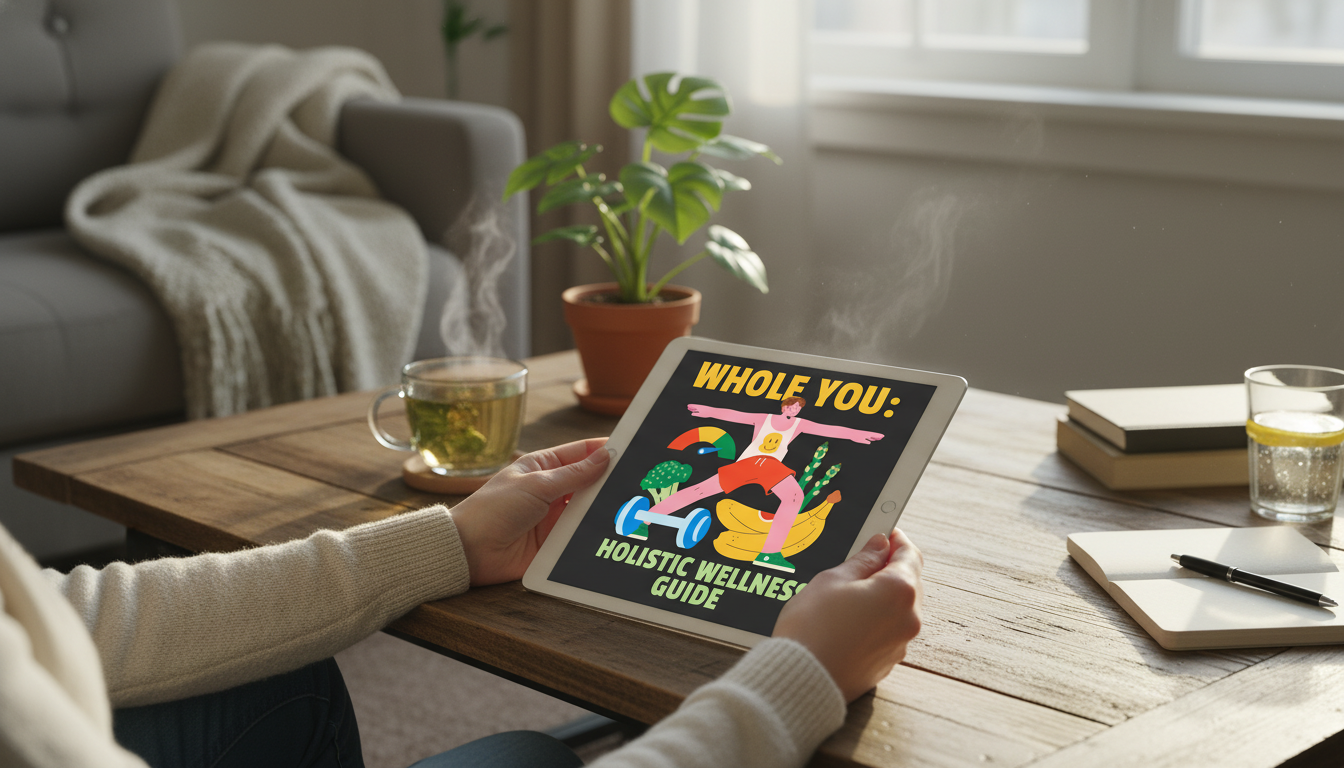
Holistic wellness connects the basics—food, movement, mental well-being, and daily self-care—into a realistic routine that fits real life. Instead of trying to “fix everything” at once, a whole-person approach focuses on steady habits that support energy, mood, and long-term health. If you’re starting fresh (or starting again), the goal is simple: build a rhythm you can repeat.
Holistic wellness is a whole-system approach where physical health, mental health, rest, stress, relationships, and environment all influence each other. When one area is strained—like sleep or stress—nutrition and motivation often feel harder, too.
Beginners often struggle because wellness advice can come with too many rules, too many changes at once, and unrealistic timelines. A practical alternative is small steps repeated consistently: prioritize sleep, drink water regularly, build balanced meals, choose gentle movement, and set simple boundaries.
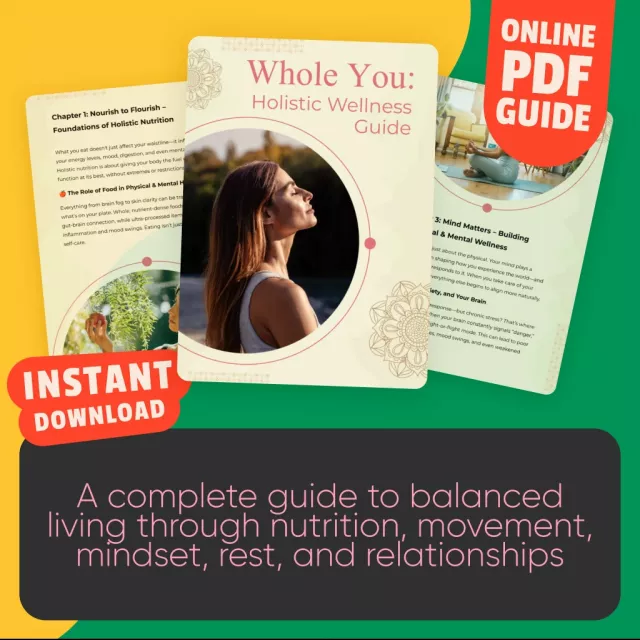
A guided framework helps by clarifying what to do first and how to track progress without perfectionism. For a step-by-step reference you can revisit anytime, explore Whole You: Holistic Wellness Guide (Digital Download).
Start with one anchor: a consistent wake time. Pair it with morning light exposure (even a few minutes outdoors) and a short wind-down routine at night. If sleep is a struggle, limit late caffeine and keep evenings predictable (dim lights, calmer activities, and a set “screens down” cue when possible).
Rather than chasing a perfect number, build simple cues: drink water with meals, add extra fluids around exercise, and notice signals like thirst, headaches, or fatigue. Keep a bottle where you can see it—visibility often beats willpower.
Use “anchor habits” instead of an idealized routine. Pick one small action for morning, midday, and evening. Quick wins include a simple breakfast option, a default lunch template, and a 10-minute evening reset (tidy one area, prep tomorrow’s water bottle, and set out clothes or walking shoes).
Balanced eating is less about perfection and more about repeating a few reliable building blocks:
Keep meals simple by rotating 2–3 repeatable breakfasts, using mix-and-match lunches, and having a short list of go-to dinners. A practical grocery approach is to shop for versatile staples: eggs, yogurt, beans, chicken or tofu, frozen vegetables, and whole grains. For general portion balance inspiration, USDA MyPlate is a helpful visual guide.
| Meal Part | What It Does | Easy Examples |
|---|---|---|
| Protein | Supports satiety and muscle repair | Eggs, Greek yogurt, chicken, tofu, beans, tuna |
| Fiber-rich carbs | Steady energy and gut support | Oats, brown rice, quinoa, potatoes, whole-grain bread |
| Colorful produce | Micronutrients and volume | Berries, leafy greens, peppers, carrots, frozen mixed veg |
| Healthy fats | Hormone and brain support; flavor | Olive oil, avocado, nuts, seeds, nut butter |
Cravings often intensify when meals are too light or too far apart. Pair carbs with protein or fat (apple + nut butter, crackers + tuna, yogurt + berries) and plan satisfying snacks so you’re not relying on “emergency eating.” A supportive mindset helps here: consistency beats intensity—aim for “better most days,” not “perfect always.”
Strength can be bodyweight circuits, resistance bands, dumbbells, or machines—choose the least intimidating option so you’ll actually show up. Start with 10–20 minutes and increase one variable at a time (reps, sets, or duration) to avoid burnout. For baseline guidance on getting active safely and consistently, see the CDC Physical Activity Basics.
Recovery matters: include rest days, prioritize sleep, and eat enough protein to support rebuilding. If you want to make movement feel more inviting, a warm layer you’ll reach for can reduce friction—like the Brunello Cucinelli Alpaca Oversized Sweater with Crochet Weave for post-walk comfort or cooler mornings.
Boundary habits help, too: protect sleep time, limit doom-scrolling, and say no to “optional” obligations when depleted. Mental health is a core part of overall well-being; the World Health Organization’s overview on mental health offers helpful context on why support and prevention matter.
Whole You: Holistic Wellness Guide (Digital Download) is designed for beginners who want a clear starting point across nutrition, exercise, mental well-being, and self-care. The digital format makes it easy to access on your phone, tablet, or computer—ideal for quick check-ins, simple routines, and weekly planning.
Yes. It’s built for beginners with simple routines that prioritize consistency over extremes, covering nutrition, movement, mindset, and self-care in an approachable way.
Use it as a weekly planning tool: pick 1–2 focus habits, follow the meal and movement templates, and do a quick weekly review to adjust what’s working. Because it’s digital, it’s easy to reference on your phone or computer when you’re grocery shopping or planning your week.
No. Holistic wellness supports healthy habits but doesn’t diagnose or treat medical conditions. For medical or mental health concerns, consult a qualified healthcare professional.












Leave a comment