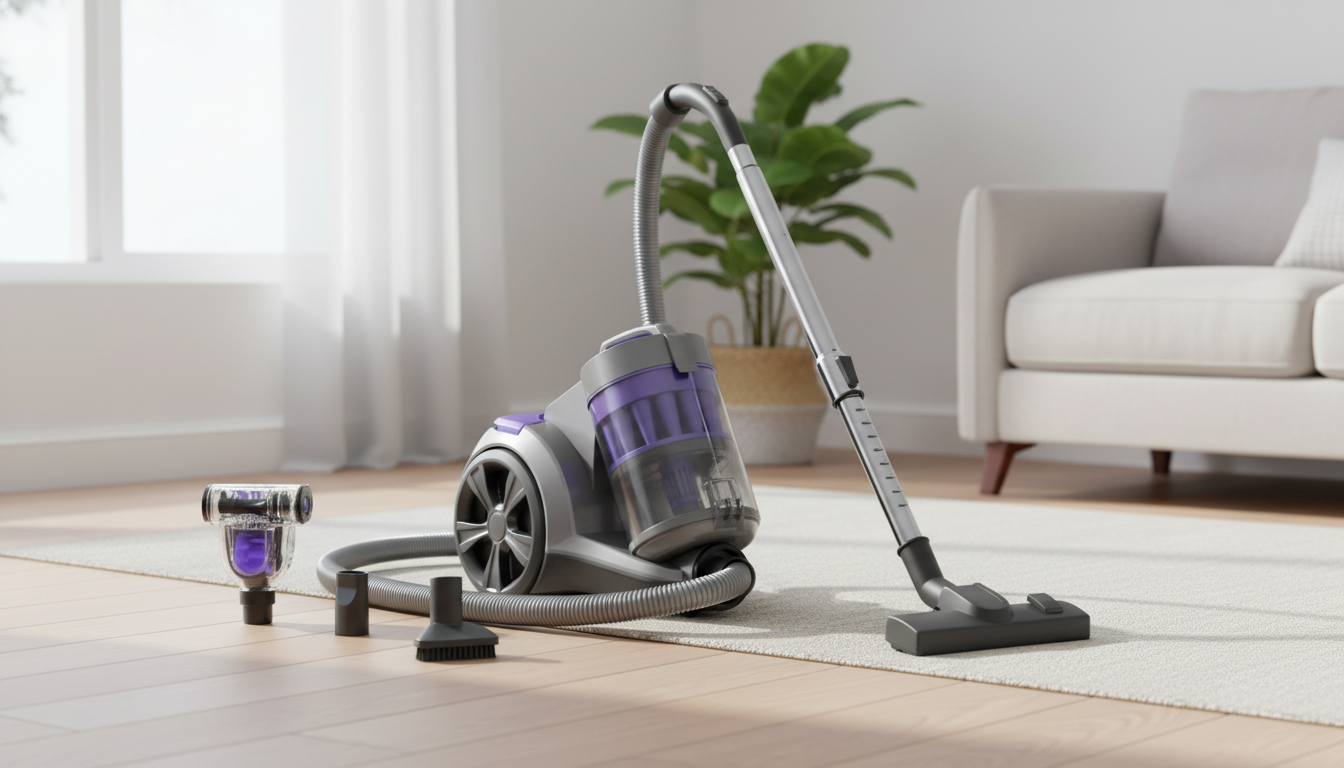
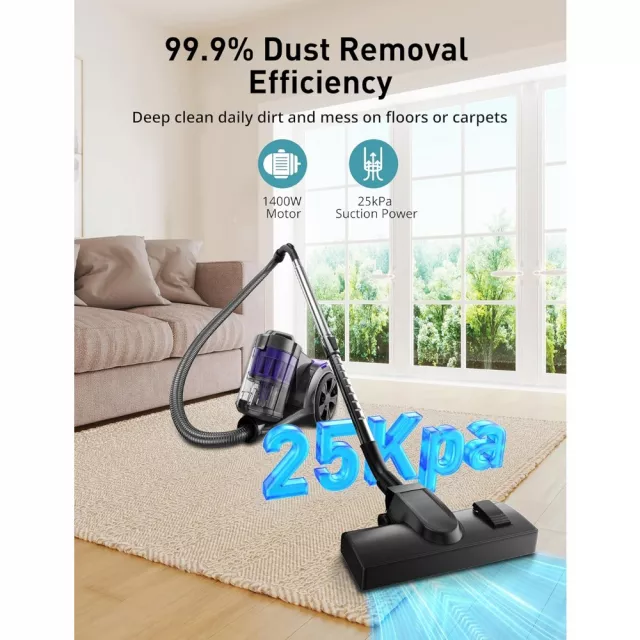
A powerful canister vacuum can make day-to-day cleaning faster, especially in homes with pets, mixed flooring, and allergy concerns. The 1400W Bagless Canister Vacuum Cleaner with HEPA Filters & Turbo Pet Tool pairs strong motor power with HEPA-style filtration and a pet-focused attachment to help lift embedded hair, capture fine dust, and keep airflow strong—without relying on disposable bags.
This model is designed around the everyday messes that pile up in busy households—especially when shedding, tracked-in grit, and fine dust all show up at once.
Specs can look similar on paper, but a few features tend to make the biggest difference once you start vacuuming the spots that actually get dirty: edges, upholstery, stairs, and high-traffic lanes.
| Feature | Why it matters at home |
|---|---|
| 1400W power | Helps maintain suction for debris pickup on rugs and high-traffic areas |
| Bagless canister design | Quick emptying and easier maneuvering around furniture |
| HEPA filtration | Captures fine dust and allergens; helpful for allergy-sensitive households |
| Turbo pet tool | Improves hair removal from upholstery, pet beds, and carpeted spots |
| Multi-surface use | Supports switching between hard floors and rugs with fewer interruptions |
Standard floor tools can struggle with “clingy” hair—especially the kind that twists into fabric or wedges into carpet tufts. A turbo pet tool adds agitation in a compact head, which is often the difference between moving hair around and actually pulling it out.
For best results, use short, overlapping strokes and keep the tool moving at a steady pace. If you notice the tool “chattering” or slowing, it’s usually a sign the brush area needs a quick hair-clearing.
Filtration is where a vacuum’s performance can matter long after the floor looks clean. A HEPA-style filter is designed to capture extremely small particles, which can be helpful when you’re managing dander, fine dust, and seasonal allergens. For a plain-language overview of what HEPA means, the U.S. EPA provides a useful reference: What is a HEPA filter?
If your household focuses on cleaner air during cleaning sessions, pairing good vacuum habits with consistent room and surface cleaning practices also helps. The CDC’s household cleaning guidance is a practical baseline for routines and handling: Cleaning and disinfecting guidance for households.
A canister vacuum rewards a simple sequence: clear the fines first, hit the hair zones with the right tool, and keep the dust cup from choking airflow.
| Task | How often | Tip |
|---|---|---|
| Empty dust bin | Every 1–3 cleans | Avoid overfilling to maintain airflow |
| Remove hair from turbo tool | Weekly (or more with heavy shedding) | Cut carefully and pull hair free to prevent damage |
| Check/clean filters | Monthly (typical) | Follow the filter’s care instructions; dry completely |
| Inspect for clogs | When suction drops | Check hose, wand, floor head, and bin seals |
| Wipe bin and seals | Monthly | Improves sealing and reduces dust plume during emptying |
HEPA filtration is designed to capture very fine particles, which can include pet dander. Results also depend on good seals, regular filter maintenance, and cleaner emptying habits to avoid dust escaping back into the air.
In pet homes, check it weekly and remove wrapped hair as needed. Keeping the brush area clear helps maintain agitation and prevents performance drop or extra strain.
Empty it outdoors or into a lined trash can by lowering the bin deep into the bag and opening it slowly to reduce the dust plume. Afterward, close the bag promptly and wash your hands.









Leave a comment