Muscle Sculpting Toolkit for Women: Build a Simple System That Actually Sticks
A structured toolkit can make strength training feel simpler: clear weekly goals, a repeatable workout framework, and a checklist that keeps progress visible. Instead of constantly searching for “the perfect plan,” a good muscle-sculpting toolkit helps you run the same core process every week—train, recover, track, and adjust—so results come from consistency, not complexity.
What’s Included in a Muscle-Sculpting Toolkit
Most sculpt-and-shred toolkits are built like a “plug-and-play” system. You’re not just getting workouts—you’re getting rules, trackers, and a rhythm you can repeat even when life gets busy.
- Sculpt & Shred guide: A step-by-step approach to training focus (lower body, upper body, core) and intensity progression so you know what to push and when.
- Checklists: Daily and weekly boxes for workouts, steps/cardio, hydration, sleep, and protein targets—simple, visible proof you showed up.
- Workout templates: Repeatable sessions for home or gym using dumbbells, bands, or machines, with clear movement patterns and structure.
- Progress trackers: Body measurements, performance markers (reps/weight), and consistency streaks to show change beyond the scale.
- Quick-start rules: Warm-up flow, rest-time guidance, and form reminders that reduce decision fatigue and keep training quality high.
Sample 7-Day Sculpt & Shred Rhythm (Adjustable)
| Day |
Focus |
Main Goal |
Notes |
| Mon |
Lower body strength |
Glutes/quads compound lifts |
Keep 1–2 reps in reserve on most sets |
| Tue |
Low-impact cardio + core |
Conditioning + trunk stability |
Short intervals or incline walk; finish with 10–15 min core |
| Wed |
Upper body strength |
Back/shoulders/arms balance |
Prioritize pulling movements for posture and shape |
| Thu |
Active recovery |
Mobility + steps |
Gentle movement; keep soreness manageable |
| Fri |
Full body + “shred” finisher |
Total-body stimulus + brief burn |
Finish with a 6–10 min circuit if energy is good |
| Sat |
Glutes/hamstrings focus |
Posterior-chain volume |
Emphasize hinges and hip thrust patterns |
| Sun |
Rest |
Recovery |
Sleep, meal prep, and checklist review |
How to Use the Guide Without Overhauling Your Life
The fastest way to burn out is to treat week one like a “new lifestyle.” A toolkit works best when it supports your current schedule and gradually improves what’s already realistic.
Training Principles That Drive a Sculpted Look
- Progressive overload: Increase the challenge over time (load, reps, sets, or density). This aligns with established resistance training progression guidance from ACSM: Progression Models in Resistance Training for Healthy Adults.
- Exercise selection: Prioritize squat, hinge, lunge, push, pull, carry—then add targeted accessories (glutes, shoulders, arms, core) for shape.
- Volume and frequency: Most muscle groups respond well to being trained about 2x/week with a manageable number of hard sets.
- Rest and pacing: 60–120 seconds is common; heavier compound lifts often need longer rest to keep reps crisp and safe.
- Form and range of motion: Controlled reps through full ranges (as tolerated) typically build more muscle than rushed partials.
Nutrition and Recovery Habits the Checklist Should Capture
- Protein target: Aim for a consistent daily range and spread it across meals. For background on protein needs and food sources, see the NIH Office of Dietary Supplements: Protein Fact Sheet.
- Calorie strategy: Pick one lane—maintenance with high consistency, or a modest deficit for fat loss—rather than swinging wildly day to day.
- Carbs and training: Carbs around workouts can improve performance and reduce those “flat” weeks where strength drops.
- Hydration and sodium: Pumps and performance often fall when intake is inconsistent; track water and consider electrolytes if you sweat heavily.
- Sleep: Treat 7–9 hours as a key lever; poor sleep commonly increases hunger and lowers training output. General activity guidance also supports regular strength work: CDC Physical Activity Guidelines.
Checklist Setup: Make It Easy to Win
Who This Toolkit Helps Most (and What to Adjust)
Common Mistakes That Stall Results
Muscle Sculpting Toolkit for Women: Product Snapshot
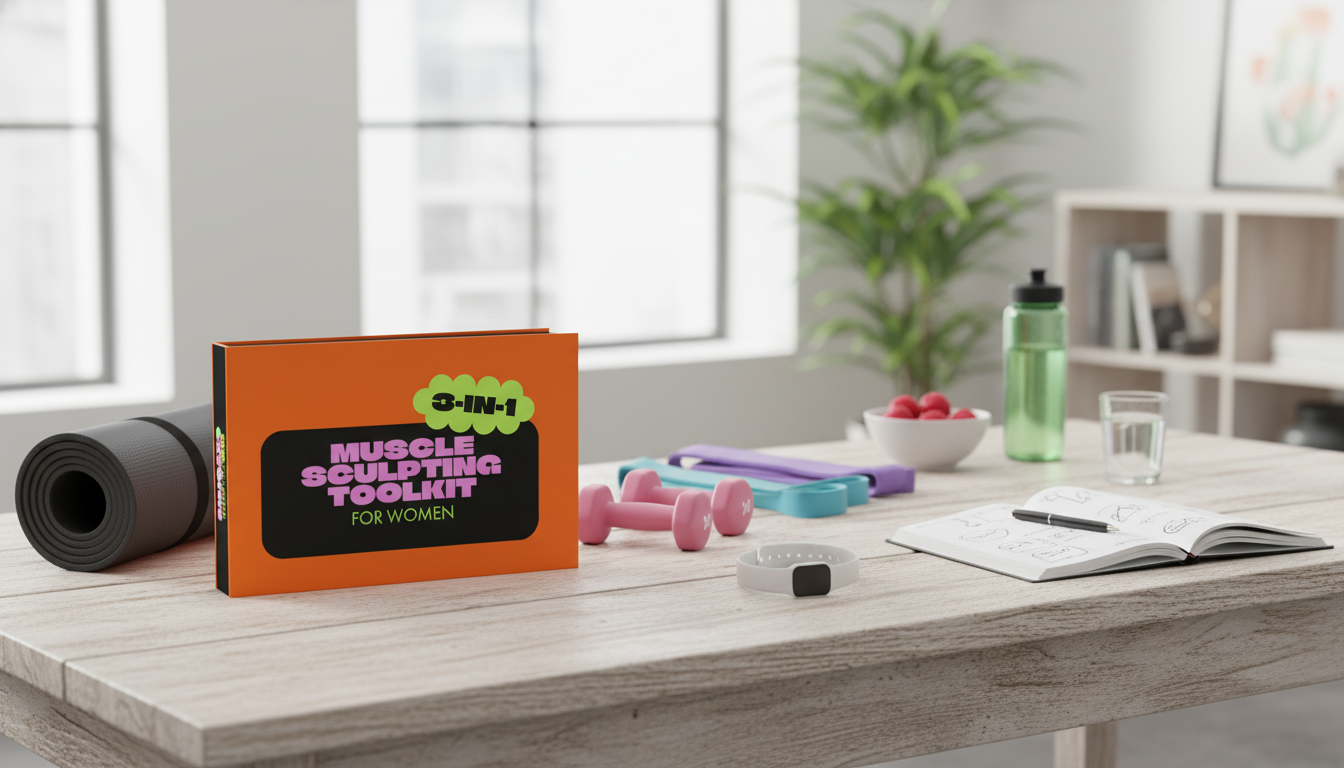
If written structure and tracking feel more motivating than piecing together workouts from multiple sources, Muscle Sculpting Toolkit for Women: Sculpt & Shred Guide, Checklist, and More is designed as a bundled system: the guide plus checklist-style structure to support consistent training weeks. It works best paired with a simple weekly plan (strength sessions, movement targets, and a short recovery routine). Price and availability can change, so confirm current details on the product page before purchasing.
Quick Details
Extras That Make Training Logistics Easier
FAQ
How many days per week are needed to see muscle-sculpting results?
Most women do well with 3–5 days per week, with at least 3 strength-focused sessions as the foundation. Results come from consistency and progressive overload more than adding extra “perfect” workouts.
Can this type of plan work with at-home dumbbells and bands?
Yes. Keep the same movement patterns (squat, hinge, push, pull), swap machines for dumbbell/band variations, and use higher reps or slower tempo when weights are limited.
Should cardio be included during a sculpt-and-shred phase?
Cardio can help with conditioning and supporting a calorie deficit, but strength performance should stay the priority. Low-impact options like incline walking or cycling are often easier to recover from than excessive high-intensity sessions.
Recommended for you










Leave a comment