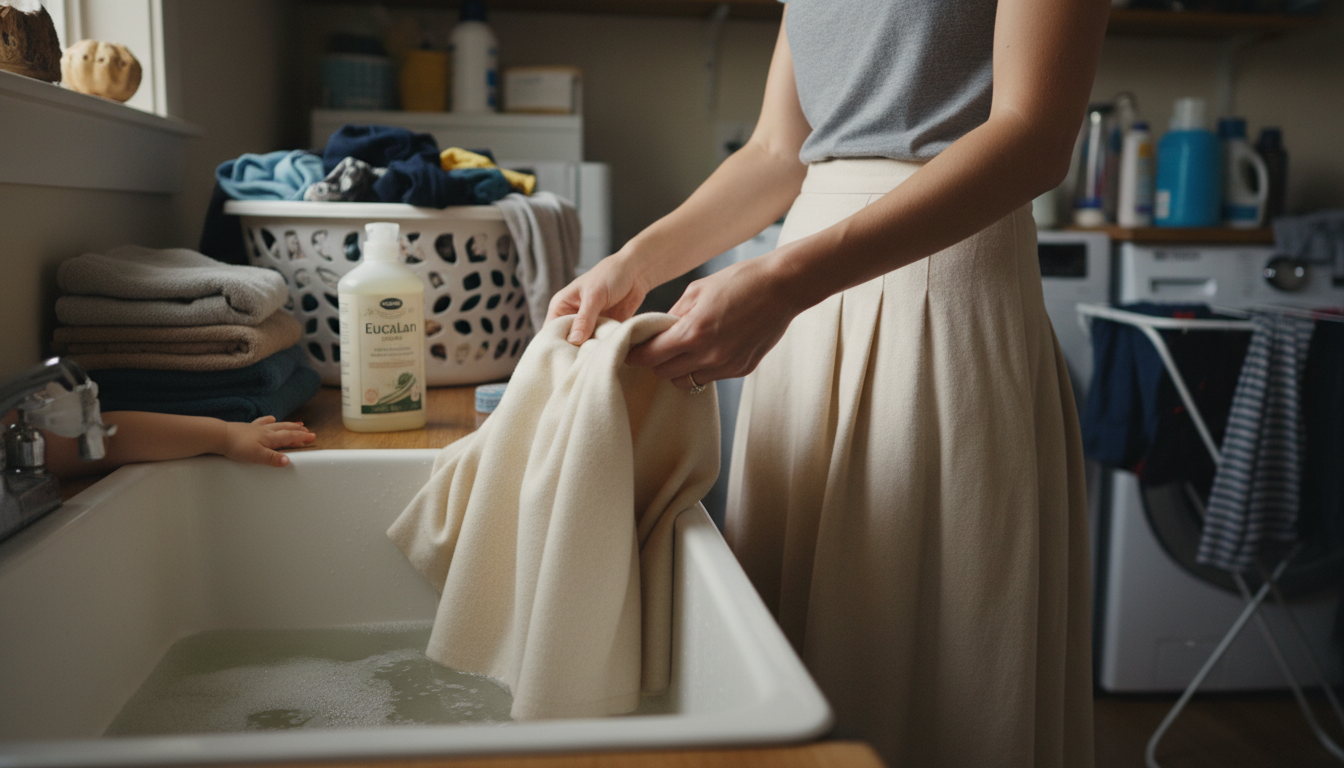
It depends on the skirt’s construction and finish, but most virgin wool midi skirts are safest with dry cleaning—especially tailored styles with linings, structured waistbands, pleats, or fusible interfacing. That said, some virgin wool skirts can be hand-washed successfully when the care label allows it (or when the fabric is an untreated, washable wool and the skirt is simply constructed).
Choose dry cleaning when the skirt is lined, sharply tailored, or has details that can distort: crisp pleats, darts, a shaped waistband, glued/fused panels, or decorative trims. Water and agitation can relax the fibers, soften a pressed finish, and cause shrinkage or rippling—problems that are hard to reverse at home. Dry cleaning is also the safer route if the label says “Dry Clean Only,” or if the skirt has color-blocking or dyes that may bleed.
If the label permits hand-wash (or says “wash cold”/“gentle”), a gentle soak can be safe. Use cool water and a wool-specific detergent, minimize handling, and avoid twisting or wringing. Rinse in cool water, then press out moisture with a towel. Lay the skirt flat to dry, reshaping it to its original measurements. Steaming afterward can help relax minor wrinkles without crushing the fabric.
Start with the care label, then consider structure: the more tailored the skirt, the more you’ll benefit from professional cleaning. If the skirt is unlined and drapey, spot-cleaning or an occasional gentle hand-wash may be enough. When in doubt, test on an inside seam with a damp cloth to check for dye transfer.
For more fabric- and care-specific guidance, see the full breakdown here: https://vestalle.com/blog/does-a-virgin-wool-midi-skirt-need-dry-cleaning-or-can-it-be-hand-washed-safely/.
Clean it only when needed: after visible stains, odors, or heavy wear. Between cleanings, air it out, brush off surface debris, and spot-clean small marks to extend time between professional services.










Leave a comment