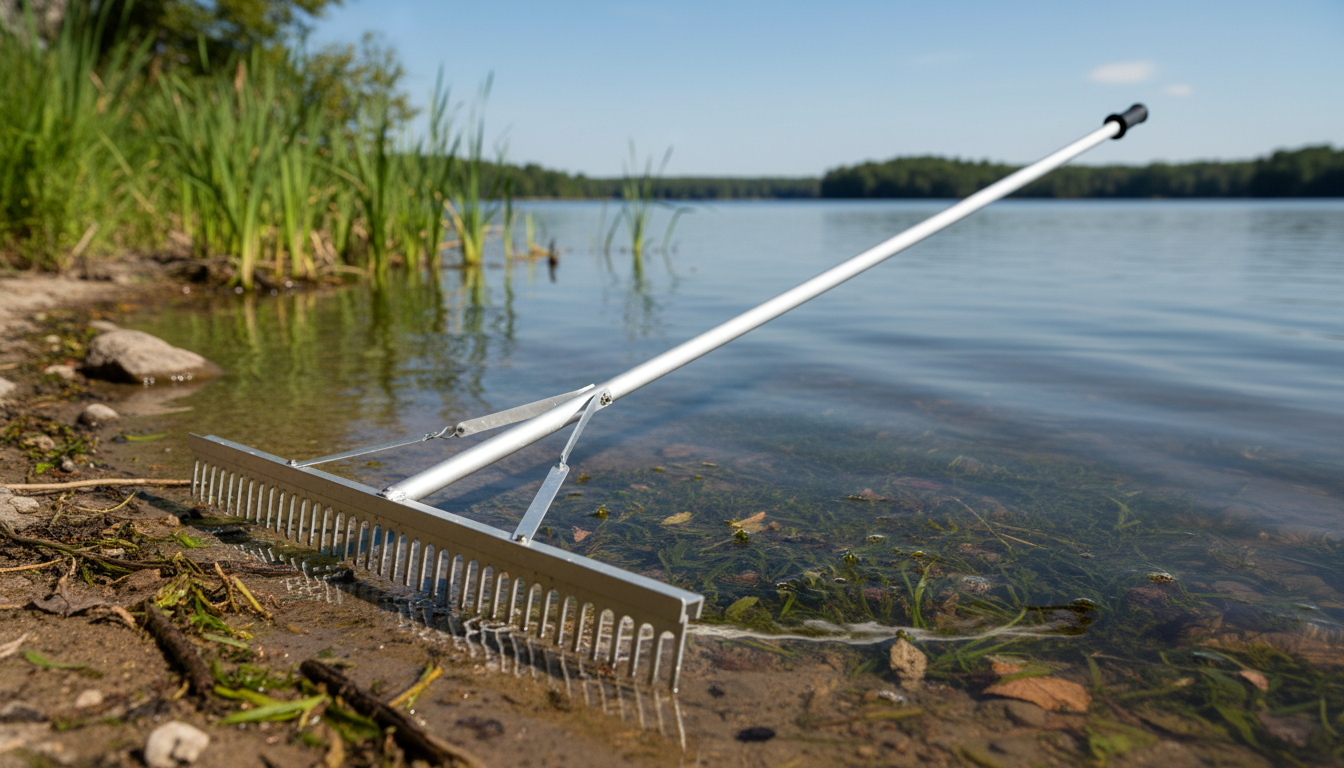
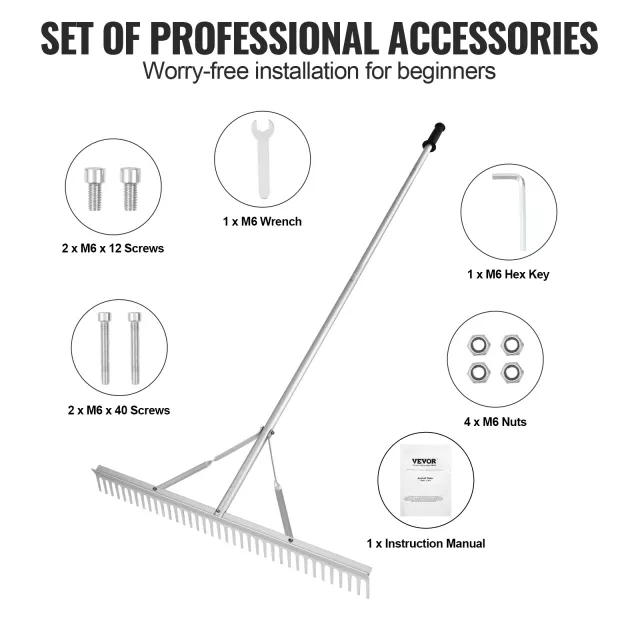
A wide, lightweight rake built for shoreline cleanup and landscape leveling makes routine maintenance faster with fewer passes. This 36-inch aluminum head paired with a long 75-inch handle is designed to pull weeds, debris, and loose material while helping reduce bending and overreaching along docks, banks, and garden beds.
What this rake is designed to do
- Clear floating and submerged plant growth near the shoreline by pulling vegetation toward the bank for collection.
- Remove organic debris like leaves, algae mats, twigs, and thatch from shallow water edges and wet sand.
- Level and groom landscape surfaces (soil, mulch, gravel) using the wide head to smooth larger areas quickly.
- Reach awkward spots around docks, seawalls, retaining edges, and shoreline rocks with a long handle that improves leverage.
Size, materials, and build details
A 36-inch head is all about coverage: it helps you “fan” a larger zone with each pull, which is especially useful when you’re grooming a beach edge, collecting storm wash-up, or flattening topdressing across a bed. Aluminum keeps the tool more manageable for longer sessions and is well-suited for wet environments where rust can shorten the life of standard steel tools.
The 75-inch handle adds reach from a dock or firm bank so you can work a shallow edge without stepping into slippery rocks or soft muck. In heavier aquatic growth, the most effective technique is usually shorter pulls with steady pressure, clearing the head often to maintain control and reduce fatigue.
At-a-glance specifications
| Feature |
Specification |
Practical benefit |
| Rake head width |
36″ |
Covers more area per pass for shoreline grooming and landscape leveling |
| Handle length |
75″ |
Improves reach and leverage; reduces bending in many tasks |
| Primary material |
Aluminum |
Corrosion resistance and easier handling compared to heavier metals |
| Best-use areas |
Shoreline, docks, shallow edges, beds, gravel paths |
Versatile tool for water-edge cleanup and general landscaping |
Best use cases around lakes, ponds, and shorelines
- Seasonal shoreline cleanup: Pull in winter debris, spring leaf litter, and storm wash-up before it breaks down and clouds water near the edge.
- Light aquatic weed removal: Work parallel to the shoreline, taking shorter pulls to avoid overloading the head with heavy vegetation.
- Beach and sand grooming: Skim the surface to collect sticks and organic matter; for deeper raking, use controlled downward pressure and multiple shallow passes.
- Dock and seawall edges: The long handle helps reach out from stable footing, keeping the user away from slippery rocks and steep banks.
For water-quality awareness and shoreline stewardship, it can help to understand common bloom and nutrient issues. The U.S. Environmental Protection Agency provides a clear overview of harmful algal blooms and risk reduction steps at https://www.epa.gov/habs.
Landscape tasks where a wide head saves time
- Leveling soil and topdressing: Spread and smooth compost or topsoil in thin layers to avoid scalping the base surface.
- Mulch grooming: Even out fresh mulch, pull mulch away from plant crowns, and tidy bed edges.
- Gravel and decomposed granite: Redistribute high spots and fill low spots with repeated crosshatch passes for a flatter finish.
- Thatch and light debris in open areas: Gather leaves and clippings efficiently without switching tools.
Because the head is wide, it’s also useful for “resetting” the look of maintained areas—quickly straightening footprints in decomposed granite, smoothing light washouts, and pulling scattered leaves into a collection zone without a lot of extra walking.
How to use it effectively (with fewer snags and less strain)
- Start with a visual scan: Note submerged rocks, branches, and fishing line that can catch on the head or edges.
- Use short, steady pulls in water: Overload causes drag and fatigue; multiple small loads are faster than fighting one heavy load.
- Angle for the task: A flatter angle skims debris and algae; a slightly steeper angle bites more for gravel and soil leveling.
- Create a collection zone: Rake material into one or two piles, then remove with a pitchfork, shovel, or debris net to keep the shoreline tidy.
- Work with the shoreline contours: Move laterally along the bank in sections rather than pulling from one fixed point.
If you’re clearing plants, avoid tearing and shredding them into small fragments when possible—many nuisance species can spread from pieces. Guidance on identifying and handling invasive species is available through the USDA National Invasive Species Information Center at https://www.invasivespeciesinfo.gov/ and state-level prevention resources such as the Minnesota DNR at https://www.dnr.state.mn.us/invasives/aquatic/index.html.
Care, storage, and longevity
- Rinse after shoreline use: Wash off sand, silt, and organic residue to prevent buildup and reduce odor.
- Dry before storage: Aluminum resists rust, but drying helps protect any fasteners and keeps handles and grips in better condition.
- Check for loosening: Periodically confirm the handle-to-head connection remains secure, especially after pulling heavy weeds or gravel.
- Store out of sun when possible: Long UV exposure can degrade some handle coatings and grips over time.
Safety and responsible shoreline cleanup
Product option available now
FAQ
Can a lake rake remove submerged weeds?
Yes for light-to-moderate growth in shallow areas. Use short pulls, clear the head frequently, and avoid overloading; dense rooted beds may take repeated passes or other methods depending on local rules.
Is an aluminum rake safe to use in and around water?
Aluminum resists corrosion, which makes it practical for wet environments. Rinse after use, keep clear of overhead power lines, and prioritize stable footing to reduce slip risk.
What handle length is best for shoreline work?
A longer handle improves reach from the bank or dock and can reduce bending. Choose a length that still feels controllable, since extra leverage can be harder to maneuver in tight areas.
Recommended for you










Leave a comment