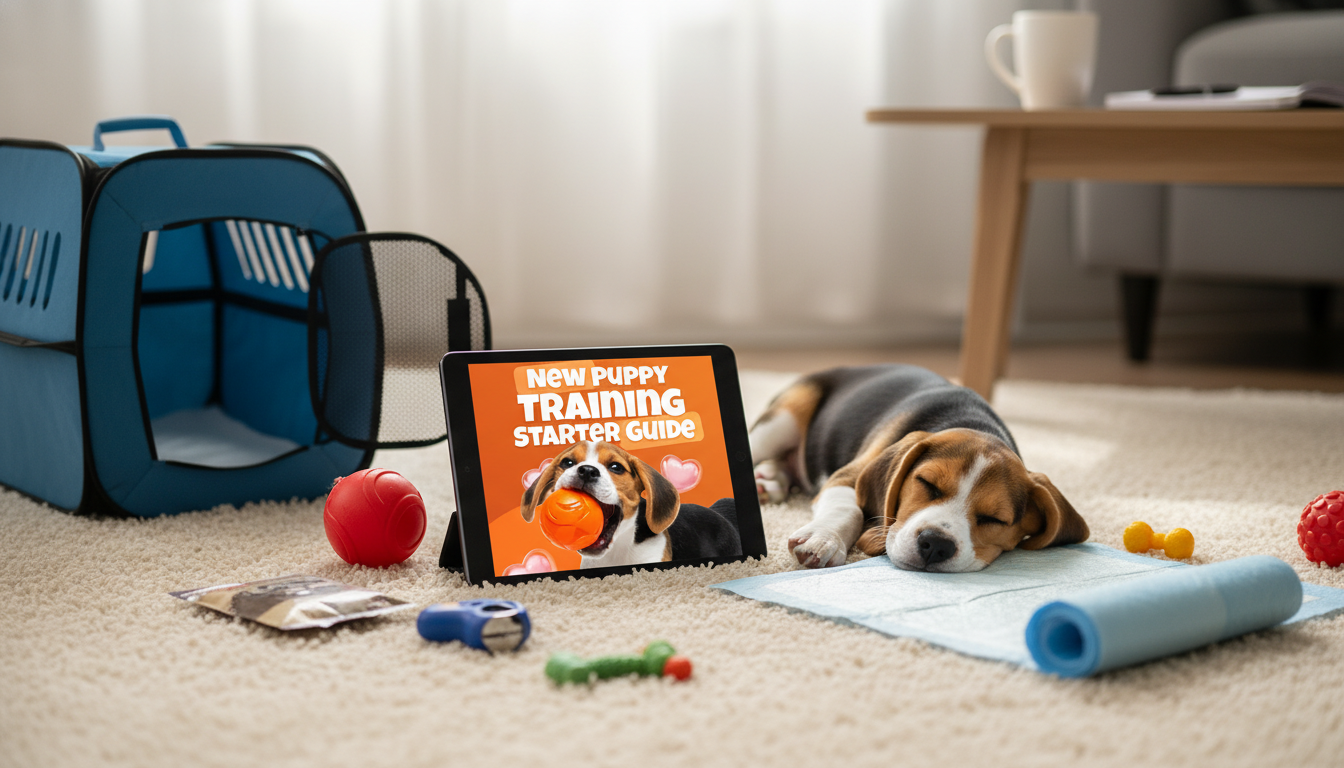
A new puppy learns fastest with short, consistent sessions and a predictable day. This starter plan breaks training into a simple 4-week rhythm—potty habits, crate comfort, calm manners, basic cues, and safe socialization—so beginners can build good behavior without guesswork.
Training goes smoother when the environment does half the work. Aim for fewer chances to make mistakes and lots of chances to earn rewards.
| Item | Why it helps | Beginner tip |
|---|---|---|
| Crate (right size) | Supports naps, helps with house-training and settling | Make it cozy; reward entering and resting |
| Playpen/baby gates | Prevents accidents and chewing in the home | Use for short breaks and calm time-outs |
| Enzyme cleaner | Removes odor that can trigger repeat accidents | Blot first; follow label instructions |
| Treat pouch + soft treats | Makes rewards fast and consistent | Use pea-size pieces; many reps per session |
| Long line (10–15 ft) | Safe outdoor practice for recall and exploration | Avoid retractable leashes for training sessions |
| Chews (safe, vet-approved) | Redirects nipping and teething needs | Swap items before the puppy gets over-aroused |
If you want a fridge-ready routine with checkboxes, use New Puppy Training Starter Guide (printable 4-week routine) to keep the whole household consistent.
Week 1 is all about rhythm. A predictable schedule reduces accidents and helps your puppy settle faster.
In Week 2, focus on comfort and emotional skills: relaxing, being handled, and learning that gentle behavior keeps the fun going.
Week 3 adds cues that make daily life safer and simpler. Keep training bite-size so your puppy stays eager.
For a broader puppy timeline and expectations by age, the American Kennel Club puppy training timeline is a helpful reference.
Socialization is not about meeting everything—it’s about learning that new things predict safety and rewards. Keep exposures calm, brief, and controlled. The AVSAB position statement on puppy socialization explains why early, positive experiences matter.
For an organized, ready-to-follow schedule, use New Puppy Training Starter Guide (printable 4-week routine). If you’re setting up a dedicated “training uniform” for treat time and walks, a structured outer layer with pockets can help keep rewards and waste bags handy, such as Balenciaga Cotton Denim Jacket with Button Closure and Front Pockets.
Plan on trips outside after waking, eating, drinking, and play, plus every 30–60 minutes in the beginning. Very young puppies often can’t hold it long, so increase frequency if you see sniffing, circling, or suddenly wandering off.
Start right away with low-risk exposures, but follow your veterinarian’s guidance based on vaccine status and local disease risk. Choose controlled, calm interactions (like well-run puppy classes or meetings with healthy, vaccinated adult dogs) instead of random greetings.
Prioritize name response, sit, down, come, leave it, and a settle routine because they support safety, handling, and day-to-day manners. These cues also give your puppy clear ways to earn rewards instead of jumping, nipping, or grabbing items.








Leave a comment