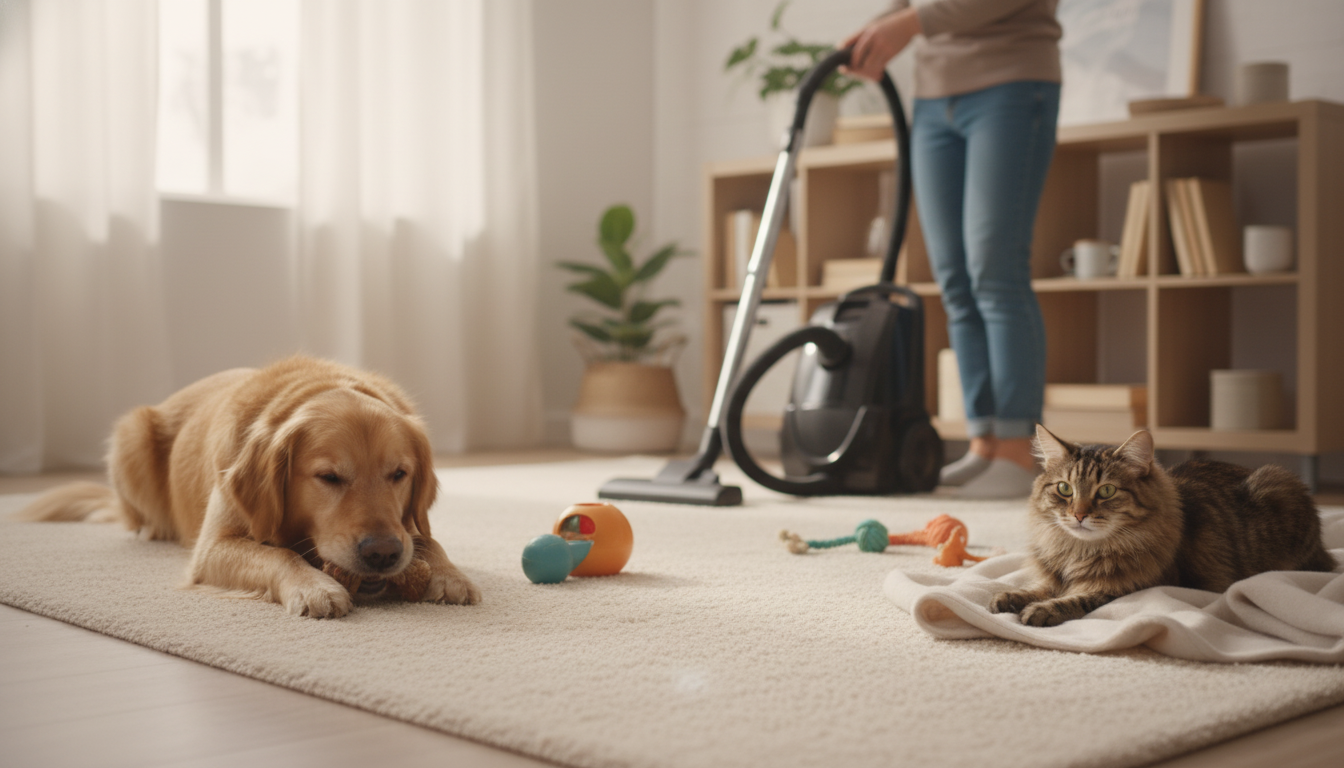
Many pets react to vacuums with barking, hiding, shaking, or attempts to chase the machine. A calmer routine is usually built through preparation, predictable steps, and gradual training that teaches the sound and movement are safe. With the right setup, most dogs and cats can learn that vacuum time is simply part of normal home life—not a threat.
Vacuum cleaners combine several things that commonly overwhelm sensitive pets, especially when they happen suddenly or too close.
Some stress is obvious, but smaller signs matter too—especially if they’re getting worse over time.
Before you work on “vacuum training,” set the stage so your pet can stay under their stress threshold. Training goes faster when the environment is predictable.
Progress is usually measured in days to weeks, not minutes. The goal is calm exposure paired with rewards—never forcing your pet to “face it.”
Place the vacuum in view at a comfortable distance. Reward calm observation with treats tossed away from the vacuum so your pet doesn’t feel pressured to approach it.
| Option | Best for | How to use | Limitations |
|---|---|---|---|
| Safe room or covered crate | Hiding, trembling, noise sensitivity | Set up before vacuuming; add bedding + water; keep it predictable | May not help pets that panic when separated |
| Desensitization training | Most fear or chase responses | Short sessions; increase sound/motion gradually with rewards | Requires consistency; can take days to weeks |
| Food puzzles/licking activities | Mild to moderate stress, food-motivated pets | Offer only if the pet can remain relaxed and eating | Not suitable if the pet refuses food when stressed |
| Sound buffering (fan/white noise/music) | Startle at the vacuum start-up | Turn on first; keep volume steady; pair with rewards | Won’t resolve fear alone without training |
| Calming aid product support | Pets needing extra help to stay under threshold | Use as directed; combine with safe zone + training steps | Not a replacement for behavior work; consult a vet for severe cases |
For additional reputable guidance on behavior and safety, consult resources from the American Veterinary Medical Association (AVMA), the ASPCA, and the RSPCA.
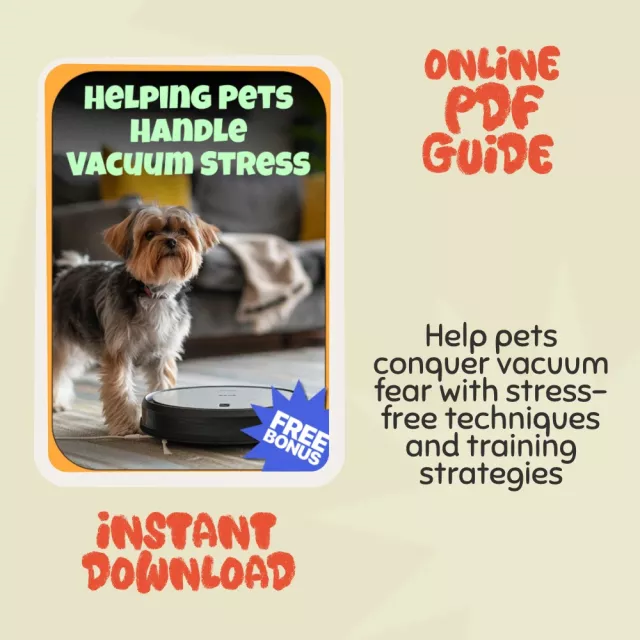
Helping Pets Handle Vacuum Stress is designed to support calmer routines during vacuum sessions when used alongside safe-zone setup and gradual exposure training. For best results, introduce it before vacuuming and keep the routine consistent so your pet can predict what happens next. Pair it with rewards, distance management, and short sessions to help your pet stay under their stress threshold.
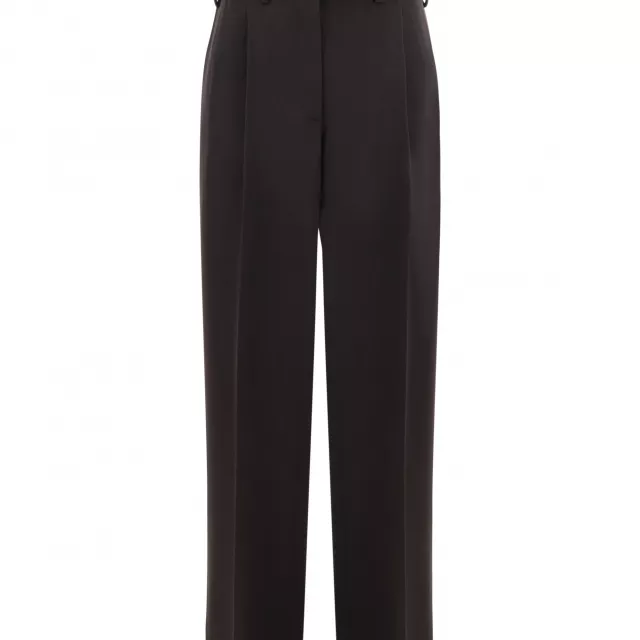
If vacuum time means kneeling, moving furniture, and running quick training sessions, a sturdy layer can make cleanup more comfortable. Balenciaga Cotton Denim Jacket with Button Closure and Front Pockets is an in-stock option for those who prefer a durable, structured outer layer during busy home routines.
It often takes days to weeks, depending on how intense the fear is and how consistent the training routine stays. If your pet won’t take treats or can’t settle, the current step is too hard—back up, add distance, and progress more gradually.
Corrections and punishment can increase fear and arousal, making reactions worse over time. Use management (safe zone, gates) to prevent rehearsing the behavior, then build calm responses with reward-based desensitization and simple alternative behaviors like “go to mat.”
Set up a protected safe room, shorten vacuum sessions, and add sound buffering so your cat can recover faster. If your cat’s appetite drops, hiding becomes prolonged, or stress shows up in other parts of life, talk with a veterinarian or behavior professional for a tailored plan.










Leave a comment