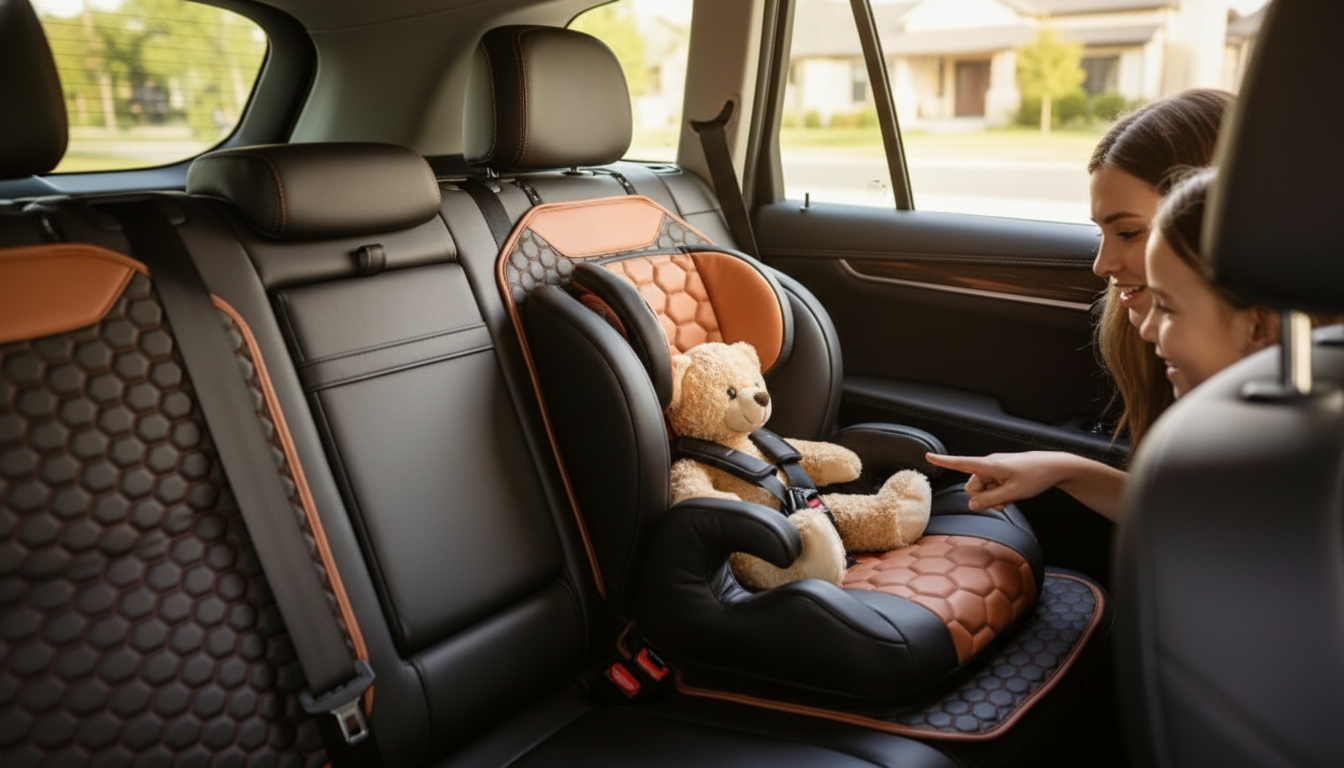
A booster seat helps position a vehicle’s seat belt so it fits a growing child correctly—across the strong bones of the shoulder and hips rather than the neck and stomach. The right choice depends on the child’s size, the vehicle’s belt geometry, and how consistently the seat will be used on real-world trips like school runs, carpools, and travel.
A booster isn’t a restraint by itself—it’s a positioning tool that helps the vehicle’s lap-and-shoulder belt do its job. When the belt lands where it’s designed to manage crash forces, a child is more likely to stay protected and less likely to “cheat” the belt because it feels uncomfortable.
For additional guidance on stages and correct belt use, review the recommendations from NHTSA and booster fit notes from the IIHS.
The “best” booster style is the one that delivers consistent belt fit in the seating position you actually use. Before buying, check whether the vehicle seat provides head support and whether the shoulder belt anchors sit in a place that won’t pull the belt toward the child’s neck.
Even a well-rated booster can perform poorly if the belt is routed incorrectly or if a tired kid slumps. This quick check takes seconds and helps set expectations: the belt stays where it belongs, every ride.
Booster safety is inseparable from real-world cooperation. Features that improve comfort and reduce routing mistakes help the belt stay correctly positioned on rushed mornings, after practice, and on long drives.
| Style | Best for | Potential trade-offs | Vehicle notes |
|---|---|---|---|
| High-back | Vehicles with low seatbacks/no headrests; kids needing more belt guidance | Bulkier; less convenient to move between cars | Great when head support is limited; check belt guide height |
| Backless | Travel, carpools, easy transfers; older kids with good sitting posture | No added head support; relies more on vehicle belt fit | Requires adequate head restraint and good shoulder belt position |
| Harness-to-booster (combination) | Families wanting a longer-use seat; kids transitioning from harness | Heavier; conversion settings must be followed carefully | Confirm both harness and booster modes fit the vehicle properly |
For broader child passenger safety guidance, the American Academy of Pediatrics offers practical, age-and-stage considerations alongside manufacturer instructions.
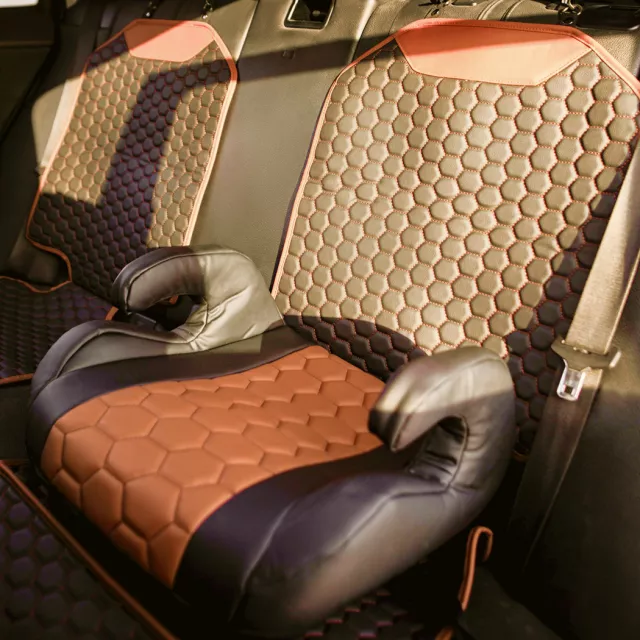
For families who want a dedicated seat for everyday driving, the Child Car Booster Seat is a ready-to-ship option to support consistent belt fit during school runs, carpools, and weekend trips.
A child is ready when they meet the booster’s minimum height/weight requirements and can sit properly for the entire ride without slouching or moving the belt. Always follow the booster manufacturer’s limits and any applicable state laws.
Most booster seats are designed for use with a lap-and-shoulder belt because the shoulder belt helps protect the upper body. Avoid using a booster with a lap-only belt unless the booster and vehicle manuals explicitly state that setup is approved.
Either can be safe when the seat belt fits correctly and the child has proper head support from the vehicle seat or head restraint. High-back models can improve belt positioning and provide head support in vehicles with low seatbacks, while backless boosters rely more on the vehicle’s belt geometry and head restraints.









Leave a comment