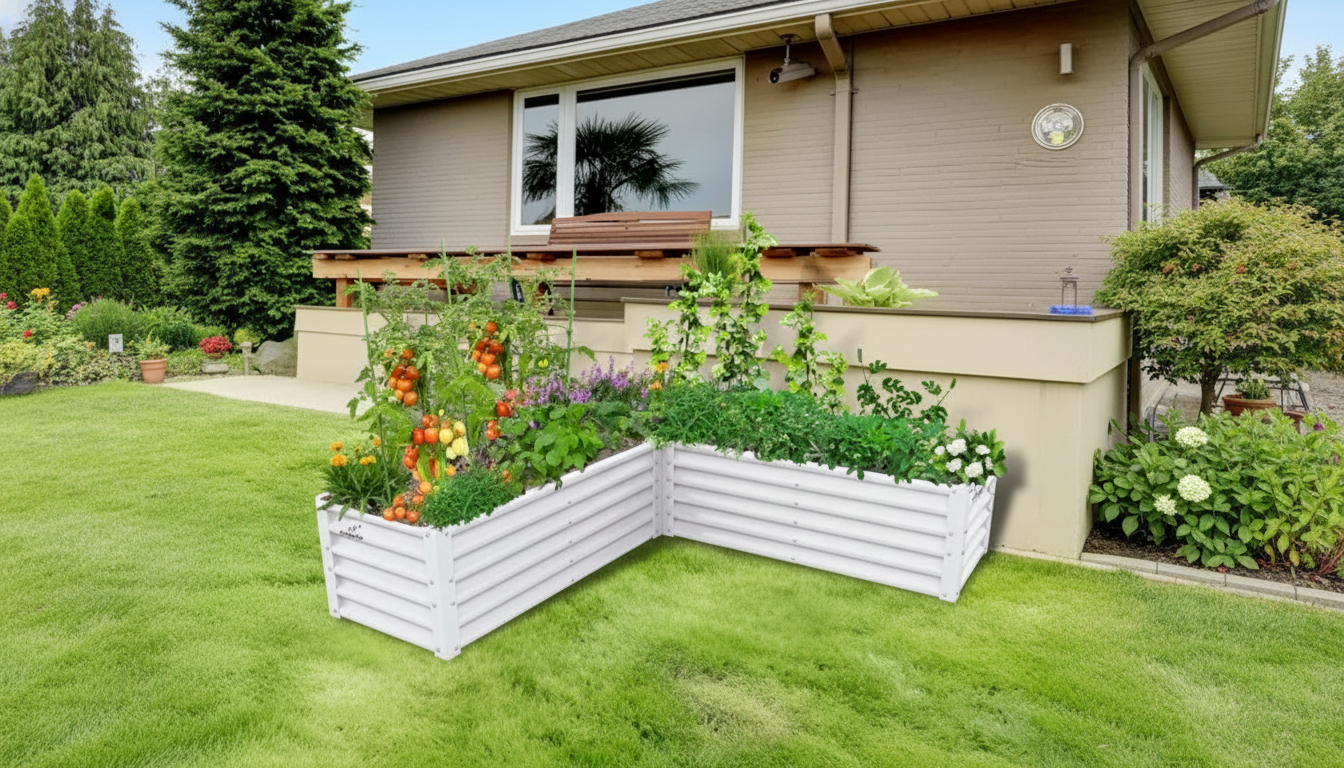
An L-shaped raised bed layout makes it easier to turn underused corners and edges into high-yield planting space while keeping pathways clear. This 2-piece metal set creates two 74x74x18-inch planters that can be arranged to suit patios, side yards, and fenced gardens, with enough depth for vegetables, herbs, and many flowering plants. For more guidance, see What kind of bed should I get for my dog with arthritis?.
This set is built around flexibility: you get two separate L-shaped metal raised beds that can be placed together for a cohesive corner garden or separated to create two distinct growing zones. Each bed’s 74×74-inch footprint supports dense planting, while the inner “cut-in” corner naturally creates an access point so you can reach farther into the bed without stepping on soil. For further reading, see Best Dog Beds of 2026 – Sleep Foundation.
The 18-inch height is a practical upgrade over shallow planters because it provides a deeper root zone, helps buffer moisture swings, and reduces compaction from foot traffic—especially important when you’re working near tight edges where it’s tempting to lean or step too close. The L-shaped geometry also hugs fences, walls, and corners neatly, converting awkward dead space into usable garden area.
If you’re ready to build a corner-friendly garden layout, start with the 2-Piece L-Shaped Metal Raised Garden Beds, 74x74x18inches Outdoor Planter Set.
Placement is where an L-shape shines. Instead of forcing a square bed into a spot that blocks movement, the “legs” of the L can run along boundaries while the inside corner stays open for standing, harvesting, and pruning.
For deeper background on raised bed planning, the University of Minnesota Extension guide to raised beds is a reliable reference, especially for siting and soil considerations.
An 18-inch bed gives you room to build a resilient soil profile, but good drainage and structure matter as much as depth.
For general raised bed guidance, including soil fundamentals, see the Royal Horticultural Society advice on growing vegetables in containers and raised beds.
| Arrangement | Works best for | Practical tip |
|---|---|---|
| Both beds in one corner | Maximum impact in a tight yard | Leave a clear standing space at the inside corner for planting and pruning |
| Beds split into two zones | Different sun exposures or crop types | Put high-maintenance crops (herbs/greens) closest to the door or hose |
| One trellis bed + one low-crop bed | Vining crops and efficient light use | Orient trellis to avoid shading the shorter crops during peak sun |
| Perimeter placement along fences | Using edges without losing pathways | Keep a consistent walkway width for wheelbarrow access |
For cooler mornings or messy projects, having dedicated outdoor clothing can make garden time more comfortable. If you want a tough layer you won’t worry about getting dirty, consider the Balenciaga Cotton Denim Jacket with Button Closure and Front Pockets. For quick slip-on footwear when stepping outside to water or harvest, the Balenciaga Knife Logo Allover Sock-Style Ankle Boots are another in-stock option.
Yes, as long as drainage is addressed. Use a permeable layer if needed, avoid blocking water escape paths, and monitor watering since hardscape won’t absorb excess moisture.
For many varieties, 18 inches is workable with a well-structured soil mix and consistent watering. If the beds sit on ground, loosening the native soil underneath helps deep-rooted plants perform even better.
Arrange them so the inner corners create a comfortable standing/work zone and keep a clear walkway. Place frequently harvested crops along the most accessible inner edges to reduce bending and overreaching.







Leave a comment