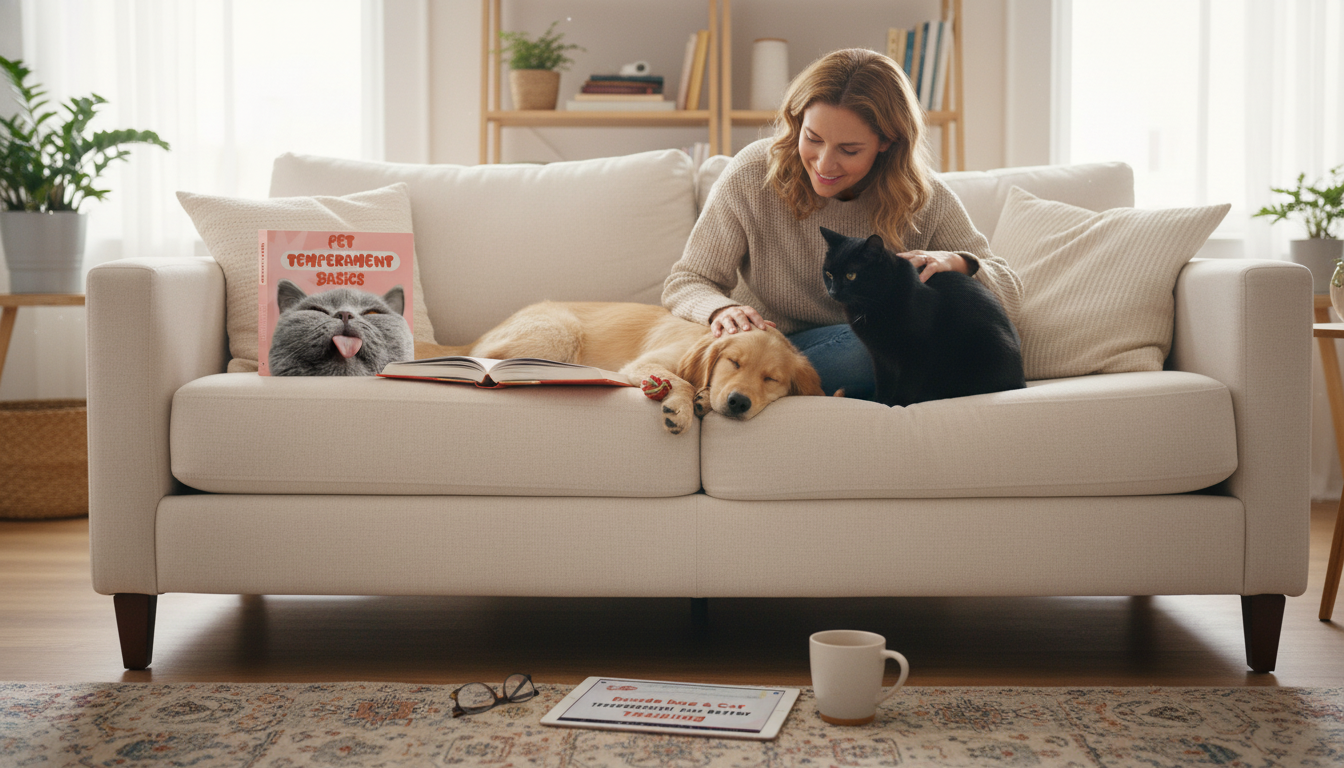
Temperament shapes how dogs and cats respond to people, handling, new environments, and learning. When stable temperament traits (like confidence or sensitivity) are separated from short-term stress signals (like fatigue or overstimulation), day-to-day behavior becomes easier to read—and care and training plans become more humane, predictable, and effective.
Temperament is a relatively stable pattern that influences how a pet typically reacts. Traits such as confidence, sociability, sensitivity, and prey drive tend to show up across many situations, even if the intensity varies. Mood and arousal, on the other hand, are short-term states—overexcited, tired, stressed, or “keyed up”—that can temporarily mimic a personality shift.
Behavior is always context-dependent. A dog who looks “bold” at home might act wary with strangers. A cat who seems “aloof” may become affectionate at night when the house is quiet. Instead of labeling a pet after one incident, track patterns over time: where it happened, who was present, how close the trigger was, and how quickly your pet recovered.
Confident pets explore, recover after surprises, and approach novelty with curiosity. Cautious pets may need more time, more distance, and clearer options to retreat.
Sociability isn’t just “friendly” or “not friendly.” Some pets prefer proximity without touch, some enjoy frequent handling, and others prefer independence with occasional check-ins.
Sensitive pets react strongly to noise, touch, fast movements, or routine changes. This can look like jumpiness, avoidance, or quick escalation when pressured.
Impulse control is the ability to pause and make a different choice. It’s closely tied to frustration tolerance, and it’s a major factor in leash reactivity, mouthing, and rough play.
Motivation affects how quickly learning happens and which rewards “land.” Some pets work best for treats, others for play, sniffing, praise, or access to favorite spaces.
Relaxed pets show soft muscles, normal breathing, and loose posture. They engage willingly or rest nearby without tension. Stress often appears earlier and quieter than people expect: freezing, avoidance, tucked posture, lip-licking in dogs, crouching or hiding in cats, tail flicking, and sudden over-grooming.
Many pets follow an “escalation ladder”: subtle stress signals first, then distance-increasing warnings (growl or hiss), and defensive actions only if the warnings are ignored. Handling consent matters. Pause frequently and watch for your pet leaning in, re-approaching, or soliciting contact—versus stiffening, turning away, or pulling back.
| Situation | Dog signals | Cat signals | Likely meaning | What to do next |
|---|---|---|---|---|
| Approach from a stranger | Ears back, weight shifted away, lip lick, turning head | Crouch, ears sideways/back, tail tucked, retreating | Uncertainty or discomfort | Increase distance; allow choice; reward calm observation |
| High arousal play | Bouncy posture, play bow, open mouth, quick pauses | Stalking, pounce cycles, dilated pupils, tail swish | Excitement; can tip into overstimulation | Add short breaks; switch to calmer games if intensity rises |
| Resource guarding risk | Stiffening over item, whale eye, hovering, low growl | Body over bowl, head lowered, growl/hiss, swat attempts | Protecting valued resource | Do not punish; manage access; consult a qualified behavior pro |
| Fear response | Freezing, trying to flee, tucked tail, panting when not hot | Hiding, flattened posture, wide eyes, growling | Threat perceived; defensive potential | Remove trigger; create safe retreat; gradual desensitization plan |
| Relaxed at home | Loose body, gentle tail wag, normal appetite, seeks rest | Slow blink, kneading, relaxed tail, choosing nearby perches | Comfort and security | Maintain routine; reinforce calm behaviors |
For deeper guidance on humane approaches, review the American Veterinary Society of Animal Behavior (AVSAB) position statements, practical resources from the American Animal Hospital Association (AAHA), and common cat behavior support from the ASPCA.
For a structured, step-by-step approach to interpreting signals and building a calmer plan, a dedicated reference can help connect the dots between body language, temperament, and training choices. See Understanding Your Pet’s Temperament: A Complete Guide to Decoding Dog and Cat Behavior for Better Care and Training for an all-in-one resource that covers both dogs and cats.
If training sessions happen outdoors or in cooler weather, comfortable layers can make consistency easier for pet parents. The Balenciaga Cotton Denim Jacket with Button Closure and Front Pockets is an in-stock option for walking and training routines where pockets and a sturdy outer layer come in handy.
Plan for a decompression period and observe behavior across multiple contexts—home, quiet walks, visitors, and handling—without pushing fast introductions. Track confidence, arousal, and recovery time over weeks, since early shutdown or hypervigilance can mask the pet’s true baseline.
No—these are often distance-increasing warnings rooted in fear, discomfort, or feeling trapped. Respect the signal, create space, and adjust the environment so your pet doesn’t need to escalate to stay safe.
Common early signs include faster breathing, trouble taking treats, frantic movement, hard staring, increased mouthing/biting, tail swishing in cats, and a sudden loss of responsiveness. Add short breaks, lower intensity, and switch to calmer activities before arousal spikes.












Leave a comment