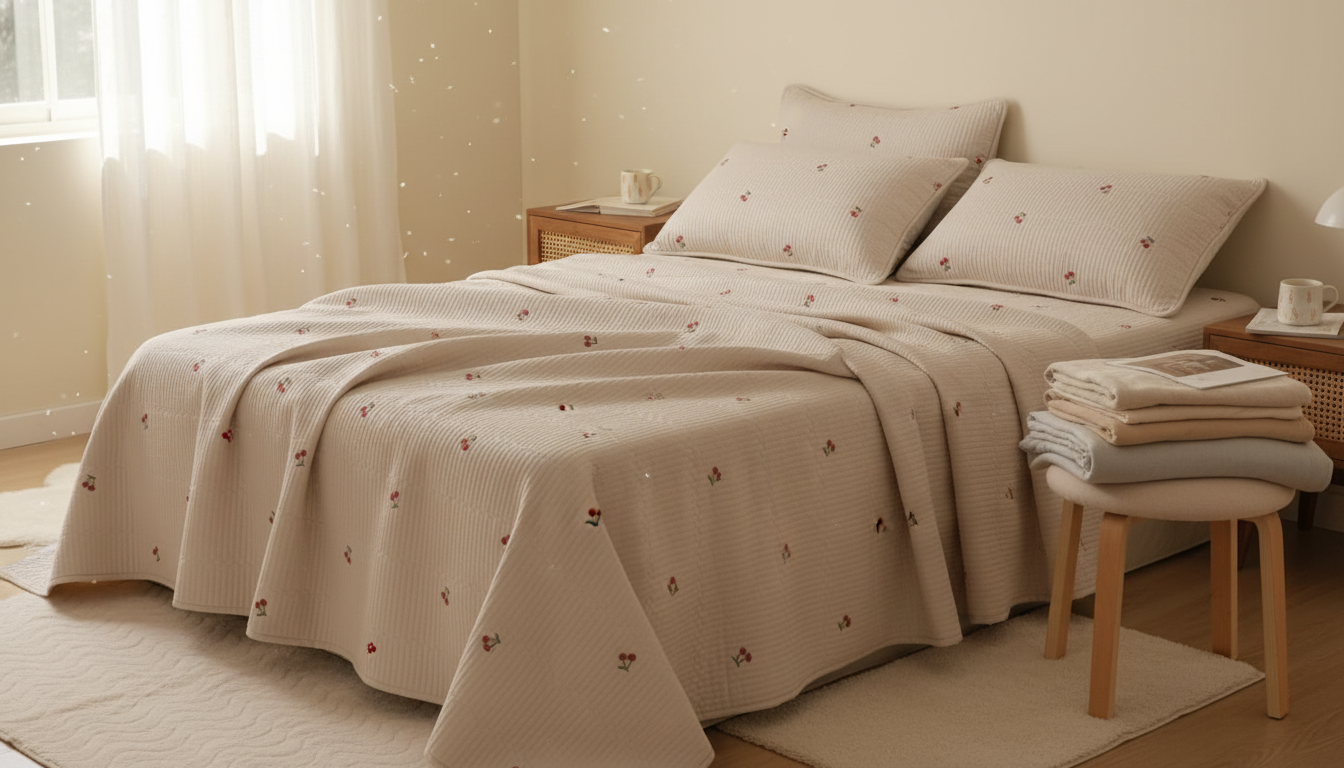
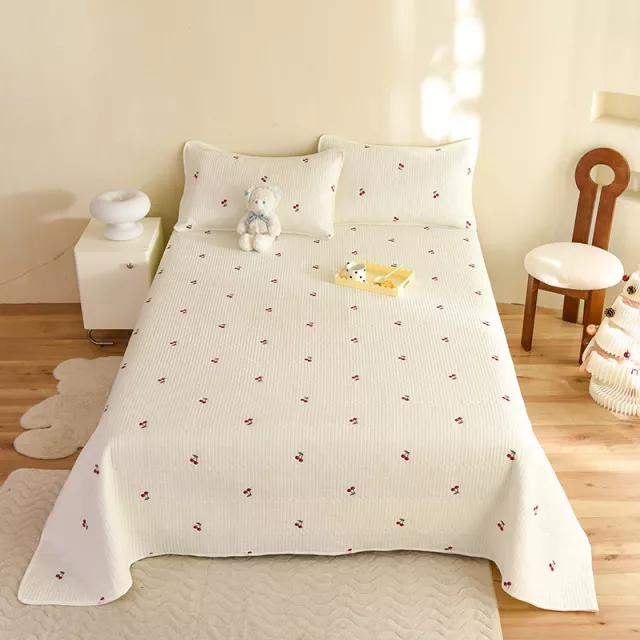
An embroidered quilted bedspread set adds instant structure and polish to a bedroom—especially when the stitching and embroidery are designed to look finished from every angle. This set pairs a quilted bedspread with matching pillowcases to create a coordinated look that works for everyday use, guest rooms, and seasonal refreshes. The quilted construction helps the bedspread drape neatly, while embroidery brings texture and detail that reads elevated without needing extra layers. Use it as a primary top layer in warmer months or as a decorative layer over a comforter when temperatures drop.
If you’re ready to update the look of a bed quickly, start with a coordinated set and build around it with simple solids and calm textures.
One of the biggest advantages of a bedspread-and-pillowcase set is visual consistency. The bed looks intentional even when you keep the rest of the styling minimal.
For a crisp, hotel-like finish, make the bed with smooth sheets first, then place the bedspread on top and gently pull it into place from the center outward. Quilting tends to “settle” nicely after a few minutes, which helps the corners fall evenly.
Embroidery is a simple way to add a focal point without going busy. Instead of relying on high-contrast prints, it adds interest through raised detail and shadow—especially in natural light.
A helpful styling rule: let the embroidered surface be the “pattern,” and keep the supporting pieces quiet. Solid sheets, matte finishes, and one accent texture (like a knit throw at the foot of the bed) usually look more elevated than piling on multiple competing designs.
Bedspreads are all about the drape. The right size depends less on your mattress label and more on the exact mattress height (plus any topper) and how much coverage you want along the sides.
| What to measure | How to measure | Why it matters |
|---|---|---|
| Mattress width | Side to side across the top of the mattress | Determines how much fabric is available for side drop |
| Mattress length | Head to foot across the top | Ensures full coverage at the foot of the bed |
| Mattress height | From top surface to bottom edge (include topper) | Affects how far the bedspread will drape down the sides |
| Desired side drop | Decide how many inches you want hanging on each side | Controls whether the look is tailored or more floor-grazing |
| Pillow dimensions | Measure pillow width and length (and thickness if lofty) | Helps avoid a too-tight or overly loose pillowcase fit |
If you’re unsure about mattress standards, a quick refresher on common U.S. bed sizes can help you sanity-check measurements before ordering (see Sleep Foundation’s bed sizes guide).
For a reliable baseline on laundry do’s and don’ts, the American Cleaning Institute’s laundry basics and Cotton Incorporated’s fabric care guidance are helpful references—especially for avoiding excess heat and agitation that can shorten the life of stitching.
It depends on the thickness of the quilting and your personal temperature preferences. Many people use a quilted bedspread as the main cover in warm seasons, then add a thin blanket or duvet underneath when it’s colder.
Check the care label first, then use a gentle cycle with mild detergent and avoid overloading the washer to reduce friction. Low-heat drying (or line drying) helps protect embroidery, stitching, and overall shape.
Measure your mattress height (including any topper) and decide how much drop you want on each side. Taller mattresses often need a larger bedspread size to achieve fuller side coverage.










Leave a comment