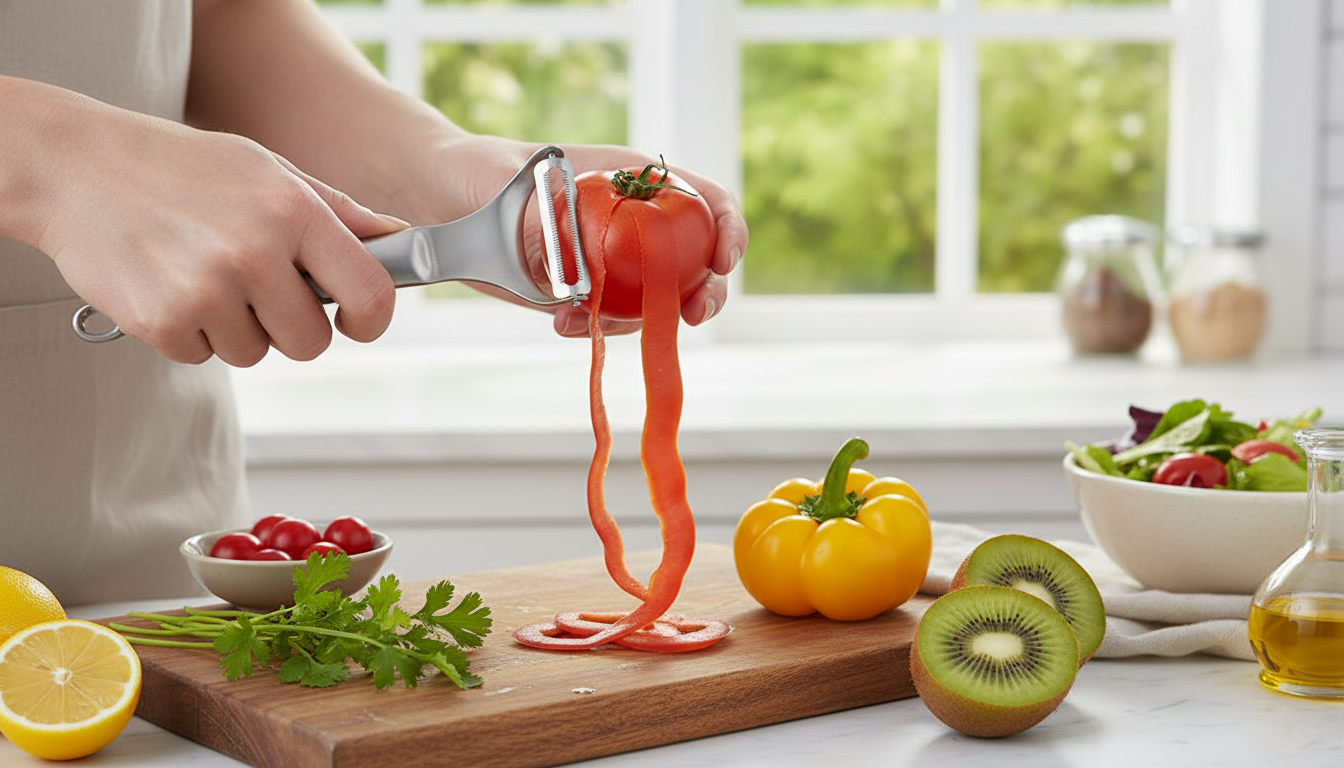
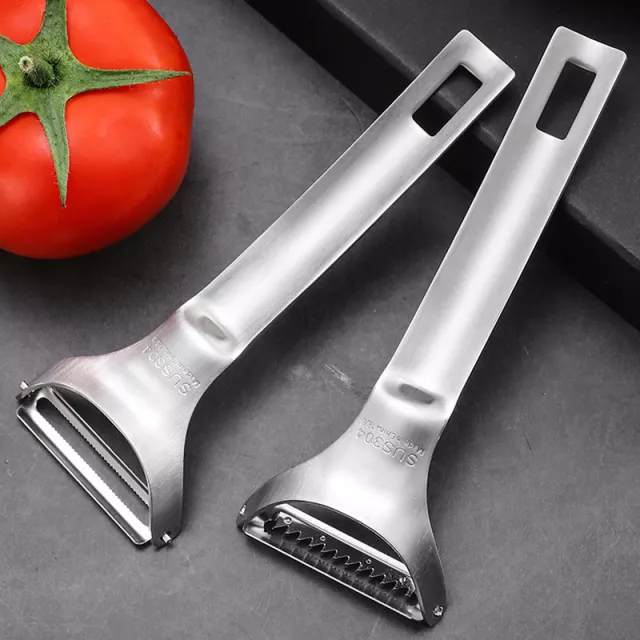
A serrated peeler is built for the moments when smooth blades struggle—think soft tomatoes, ripe peaches, or thin-skinned produce that tends to slip. This 304 stainless steel vegetable peeler pairs a corrosion-resistant body with a serrated edge designed to grip and glide, helping reduce wasted flesh while keeping prep fast and controlled.
If you’ve ever watched a straight peeler skid across a wet cucumber or tear a delicate kiwi, the difference is usually traction. A serrated edge creates that “first bite” so you can start a clean peel without digging in or overcorrecting your angle.
Serrations aren’t just for bread knives—they can be a practical upgrade for everyday produce prep. Instead of relying on one continuous, smooth cutting edge, a serrated blade uses tiny teeth to catch the surface and keep the peel moving in the direction you intend.
For best results, let the teeth do the work. Short, calm strokes usually outperform heavy pressure, especially on thin skins where you’re trying to preserve the flesh underneath.
Material matters on a tool that gets wet constantly and meets everything from citrus to tomato acid. 304 stainless steel is widely used for food-contact tools because it balances durability, corrosion resistance, and easy upkeep.
For additional background on stainless steel in food-related environments, the Nickel Institute offers helpful overviews at nickelinstitute.org, and technical summaries of 304 stainless steel are widely referenced through materials resources such as AZoM.
| Feature | Serrated blade | Straight blade |
|---|---|---|
| Best for | Soft or slippery produce; thin skins | Firm produce; long, smooth peels |
| First contact | Grips quickly; less sliding | May slide on slick skins |
| Peel thickness | Can be very thin with light pressure | Often thin and consistent on firm items |
| Typical feel | More traction; slightly textured cut | Smooth, continuous glide |
Two peelers can look similar and still feel completely different in your hand. Small design choices influence how controlled the cut feels and how tiring repetitive prep becomes.
When a peeler tracks smoothly, you tend to peel thinner by default—less waste, fewer gouges, and fewer “cleanup” passes afterward.
A serrated peeler shines when the surface is slick, soft, or inconsistent. Keep it within reach for produce that tends to fight back with a straight blade.
For food handling basics (like preventing cross-contamination when moving between produce and other ingredients), the USDA’s kitchen safety guidance is a reliable reference: fsis.usda.gov.
Serrations do their job by holding onto tiny bits of peel—so cleaning is less about effort and more about timing and the right tools.
If you’re washing by hand, aim a gentle stream of water through the serrations from both directions. That quick rinse often prevents buildup that later requires scrubbing.
304 Stainless Steel Vegetable Peeler with Serrated Blade
It often is, because the serrations grip thin, slippery tomato skin instead of sliding across it. Use light pressure and short strokes to start the peel cleanly without gouging the flesh.
304 stainless steel is highly corrosion-resistant, but it can still stain or spot if it’s left wet, dirty, or soaking for long periods. Rinsing promptly and drying before storage keeps it looking and performing its best.
Rinse it right after use, then use mild soap and a soft brush to clear peel bits from the serrations. Dry thoroughly and store it in a way that protects the edge and reduces accidental nicks.









Leave a comment