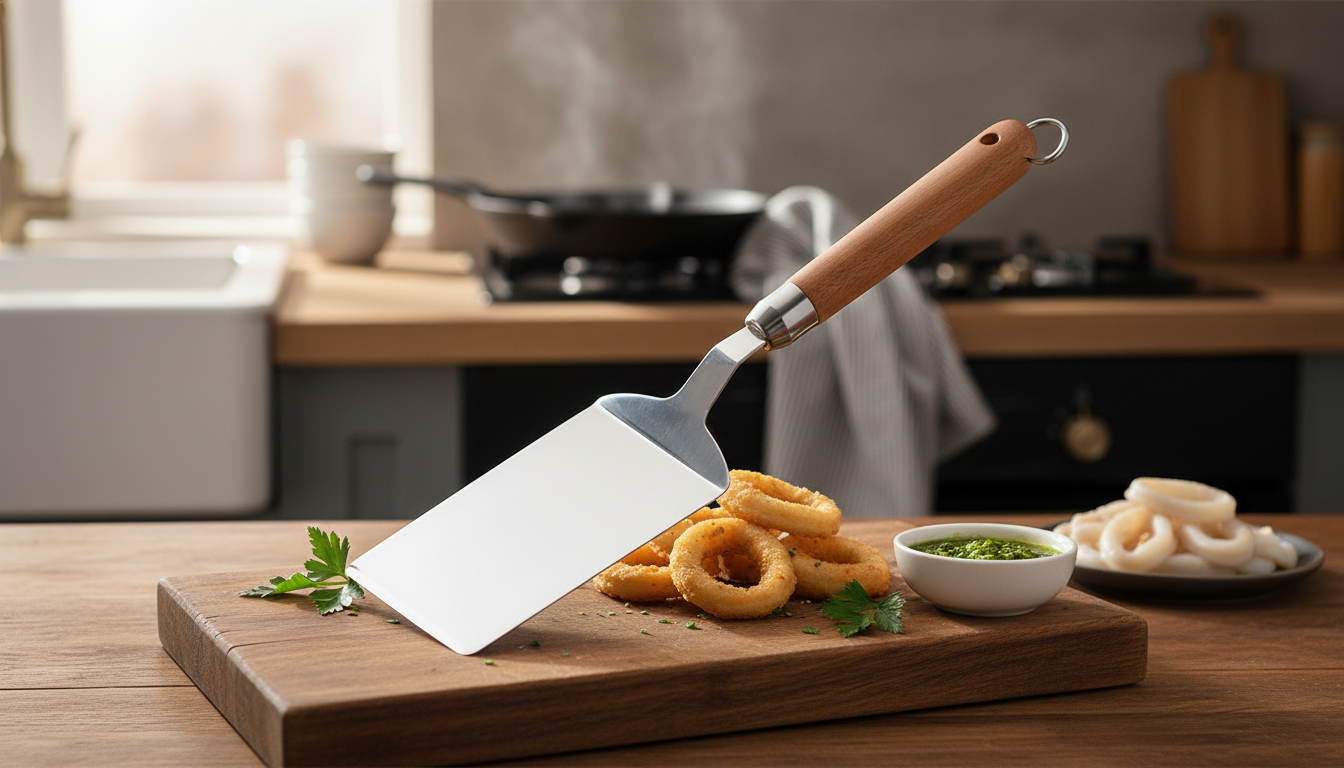
A square-head spatula is built for control: clean edges for getting under food, a firm stainless steel head for lifting, and a wooden handle that stays comfortable in hand. This style is especially handy on flat-top griddles, cast iron, and sheet pans where precision and leverage matter. If rounded turners feel a little vague at the corners—or a thin nylon turner flexes too much when you’re flipping heavier foods—a square stainless head can feel like a noticeable upgrade in everyday cooking.
Square-front spatulas are all about alignment and coverage. The straight leading edge and corners help you make contact exactly where you want it, which is useful when food is thin, browned, or stuck to a flat surface.
On a griddle, that crisp edge is the difference between “nudging” and “getting under.” On sheet pans, it helps you lift cookies or roasted vegetables without breaking delicate edges.
The best spatulas balance toughness at the business end with comfort where your hand stays. Stainless steel and wood are a classic pairing for that reason.
When cooking at higher heat, a sturdy metal head also feels more predictable: it stays flatter under pressure, helping you get a clean lift under a smash burger crust or a well-seared piece of chicken.
Square-head stainless turners tend to become “default” tools because they cover a lot of ground—flipping, lifting, portioning, and gently scraping—without needing a drawer full of specialty utensils.
| Feature | What it means in the kitchen |
|---|---|
| Head material | Stainless steel for strength, heat tolerance, and easy cleaning |
| Head shape | Square front edge for crisp corners and controlled lifting |
| Handle material | Wood for comfort and a cooler grip near heat |
| Best surfaces | Griddle, cast iron, stainless pans, sheet pans (use care on nonstick) |
| Common tasks | Flip, lift, portion, and scrape gently |
This is a practical tool when the cooking surface is flat and the food needs a confident lift.
For grilled sandwiches and quesadillas, the square edge makes it easier to get all the way to the center without bending the crusty surface. For sheet-pan meals, it helps scoop and serve without leaving half the caramelized bits behind.
A stainless head is low-fuss, while the wooden handle benefits from a little routine care. Good cleaning habits also support safer kitchens; for general food-safety practices, see the USDA Food Safety and Inspection Service kitchen guidance and the FDA Food Code.
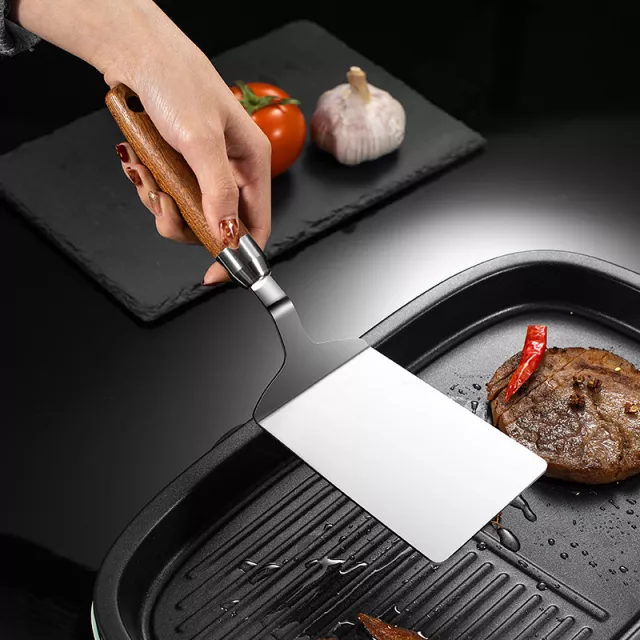
If you want a durable, no-nonsense turner for griddles, cast iron, and sheet pans, the Stainless Steel Square Head Spatula with Wooden Handle pairs a strong stainless head with a comfortable wooden grip. It’s suited to everyday flipping and lifting, especially when a lightweight plastic turner feels too flexible for high heat or heavier foods.
It can be used gently, but metal edges can scratch nonstick coatings. For best results, reserve stainless turners for griddles, cast iron, and stainless cookware, or use very light pressure on nonstick.
Hand-wash it with mild soap, avoid soaking the handle, and dry promptly. Conditioning the wood occasionally with food-safe mineral oil can help maintain the finish.
It’s best for flipping and lifting foods with straight edges—smash burgers, pancakes, hash browns, grilled sandwiches, and tray-baked items—especially on griddles and cast iron.









Leave a comment