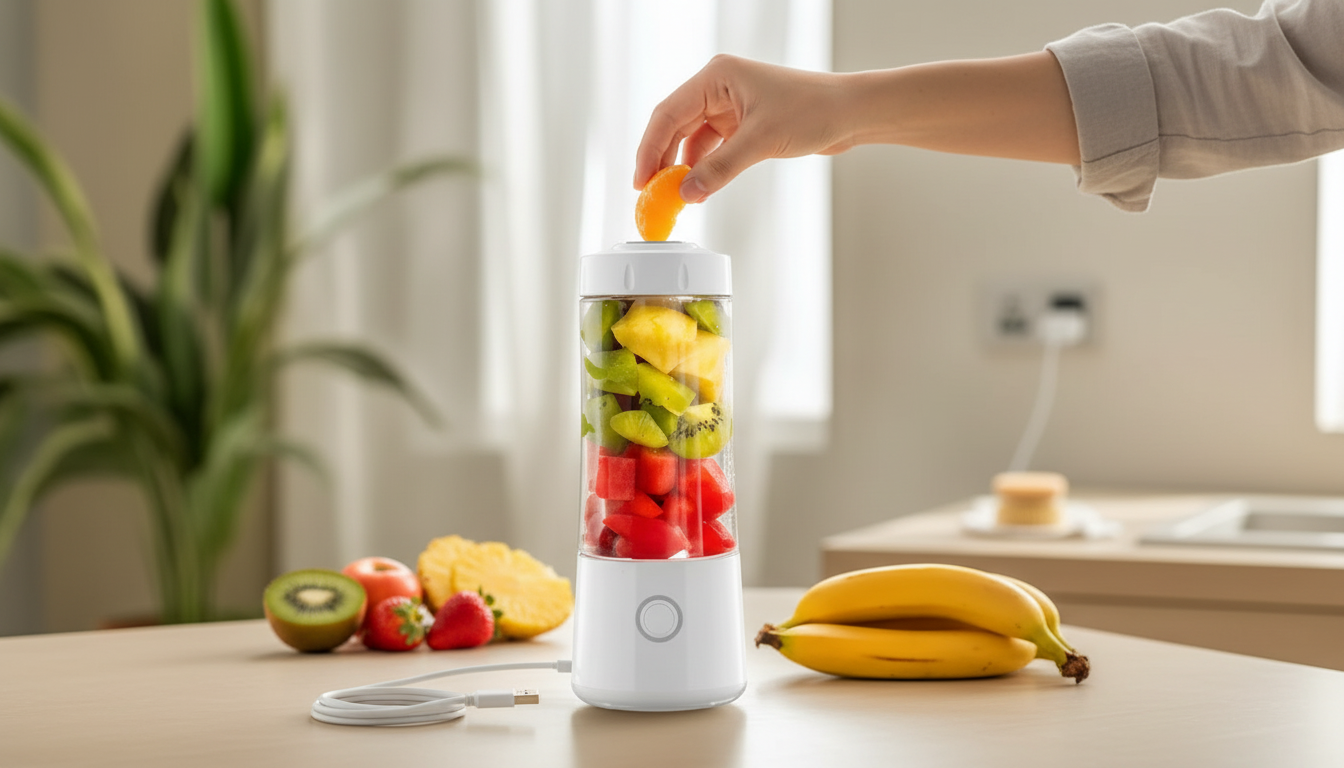
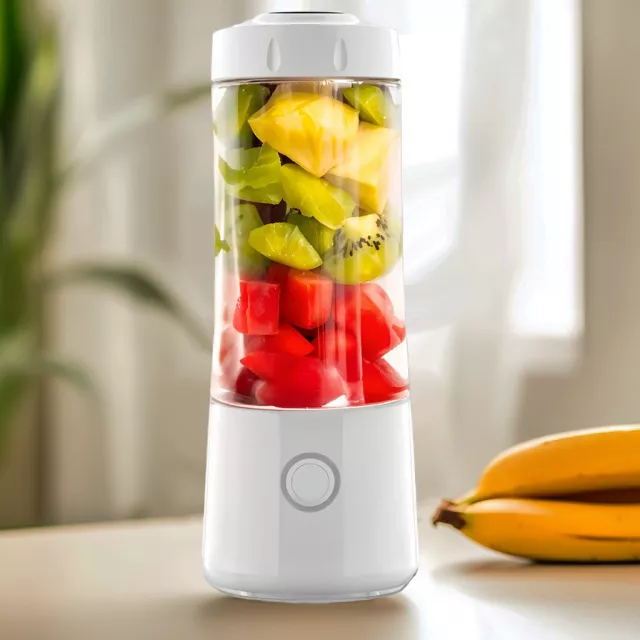
A compact USB-powered blender can turn fruit, soft veggies, and mix-ins into smoothies, shakes, and quick snacks anywhere there’s a charging port. It’s a practical alternative to hauling a full-size blender to the office, a dorm, or a hotel—especially when you’re working with pre-cut ingredients and a splash of liquid. Below is a clear look at what a small high-speed portable juicer-style blender does well, how to use it safely, and how to keep it running smoothly over time.
For food-handling basics while traveling or packing ingredients for later, follow the FDA’s guidance on food safety for people on the go and the CDC’s core steps to clean, separate, cook, and chill.
Think of a USB portable blender as a single-serve mixer built for convenience. It shines with soft, easy-to-blend ingredients and quick routines, and it’s most satisfying when you treat it like a “small batch” tool rather than a countertop workhorse.
| Task | Works Well | Tips for Better Results | Not Ideal When |
|---|---|---|---|
| Smoothies (soft fruit + liquid) | Yes | Add liquid first; cut fruit small; blend in short pulses | Using large frozen blocks or very thick mixtures |
| Protein shakes | Yes | Add powder after liquid to reduce clumping | Very thick, no-liquid mixes |
| Baby-food-style purees | Sometimes | Steam/soften ingredients; blend warm then cool | Hard raw carrots or fibrous stems |
| Crushing ice | Limited | Use small ice chips; add liquid; pulse | Large cubes or a fully packed cup of ice |
| Nut butter | No | — | Needs high torque and continuous blending |
A portable blender is quickest when you adopt a consistent load order and a short pulse-first blend style. This helps ingredients settle into the blades without overheating the motor.
Most performance complaints with compact blenders come down to residue buildup, dulling from hard ingredients, or battery habits. A quick rinse routine makes a noticeable difference.
| Lifestyle | Why It Works | Setup Tip |
|---|---|---|
| Commuters | Single-serve drinks without a full kitchen | Pre-portion fruit in a container the night before |
| Students | Small footprint and easy storage | Keep a sponge and soap for quick clean-ups |
| Gym-goers | Fast protein shakes anywhere | Carry a small power bank for charging |
| Busy mornings | Quick blending with minimal dishes | Use water + soap blend cycle immediately after pouring |
It depends on the model, but most are limited to small ice chips with enough liquid. Large cubes or a tightly packed cup of ice can stall the blades and strain the motor, so pulsing with added liquid usually works best.
Rinse right away, then add warm water with a drop of dish soap and blend briefly. Rinse again and air-dry; occasionally deep-clean seals and threads to prevent buildup and lingering odors.
Soft fruits like banana, berries, mango, and peaches blend easily, especially with liquid added first. Pre-cut frozen fruit also works well; fibrous fruits should be cut smaller and blended a bit longer for smoother results.











Leave a comment